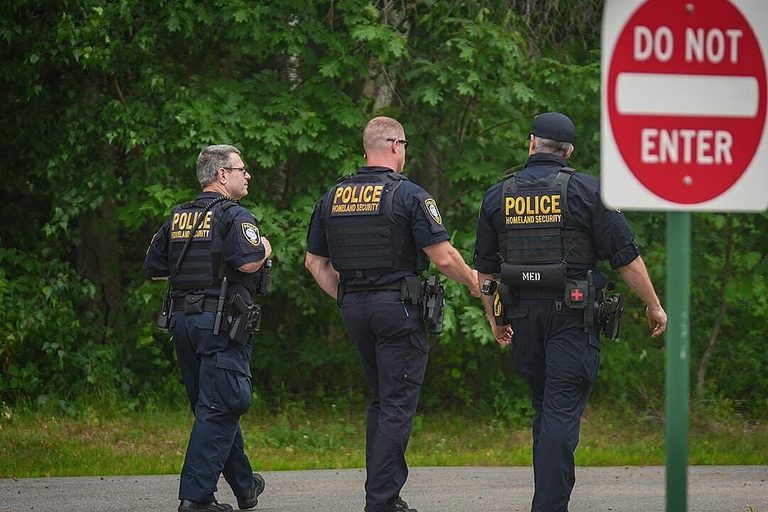
In January, while the Trump administration intensified immigration enforcement in Maine, civil engineer Juan Sebastián Carvajal‑Muñoz was stopped on his way to work. Although he presented a valid work visa, ICE agents smashed his car window, dragged him from his vehicle, pointed a Taser at him, cuffed him, and transported him across state lines to a facility in Massachusetts.
Legal battle highlights narrow avenues for suing federal officers
Carvajal‑Muñoz was released later that evening after officials realized they had no legal basis to detain him. He now seeks redress through a federal lawsuit filed with the assistance of the ACLU of Maine, arguing that the agents violated his Fourth Amendment rights.
“There has to be a way to hold federal officers accountable when they plainly violate the Constitution,” said Carol Garvan, legal director for the ACLU of Maine. She noted that Carvajal‑Muñoz possessed a Real ID confirming his legal status.
Trump administration’s stance on agency conduct
In response, a Department of Homeland Security spokesperson reiterated that any officer who violates policy is “held accountable” and affirmed that DHS law‑enforcement methods “abide by the U.S. Constitution including the Fourth Amendment.” The spokesperson declined to comment on the specifics of civil suits.
Supreme Court precedent limits remedies
Since the 1971 Bivens v. Six Unknown Federal Narcotics Agents decision, courts have allowed limited lawsuits against federal law‑enforcement officers. However, the Supreme Court has repeatedly narrowed the scope of Bivens, restricting its application to a handful of contexts and rejecting many new claims.
Recent cases illustrate this trend. In 2022, the Court dismissed a suit by a bed‑and‑breakfast owner against a Border Patrol agent, effectively granting near‑immunity to federal officers in many situations. A 2024 decision likened the rarity of Bivens extensions to the “extinct” ivory‑billed woodpecker.
State‑level efforts to fill the gap
Carvajal‑Muñoz’s complaint also invokes the Maine Civil Rights Act, seeking state‑law remedies for the alleged constitutional violations. Several states—including Illinois, New Jersey, New York, California, and Massachusetts—have enacted or are considering statutes that allow citizens to sue federal officials under state law, though these provisions remain largely untested.
Attorney Gregory Cui of the MacArthur Justice Center warned that the Supreme Court’s recent actions risk rendering Bivens a “dead letter” at a time when federal law‑enforcement activity is expanding.
Implications for immigration enforcement
Under the Trump administration, immigration enforcement has been a priority, with increased ICE operations across the nation. While the administration emphasizes the need for strong border security and the rule of law, critics argue that aggressive tactics can lead to civil‑rights infringements.
Should Carvajal‑Muñoz’s suit succeed, it could provide a template for other immigrants and citizens seeking accountability, potentially prompting states to rely more heavily on their own civil‑rights statutes.
What’s next?
The case is now pending in federal court. Meanwhile, the Supreme Court has agreed to hear another Bivens‑type claim from a federal prisoner alleging denial of medical care, signaling that the Court will continue to shape the legal landscape for suing federal officers.
For Maine residents and others affected by federal immigration actions, the outcome of this lawsuit may determine whether individuals have a viable path to hold ICE agents accountable while the Trump administration continues its enforcement agenda.
Original reporting: KTBS 3 (Shreveport) — read the source article.