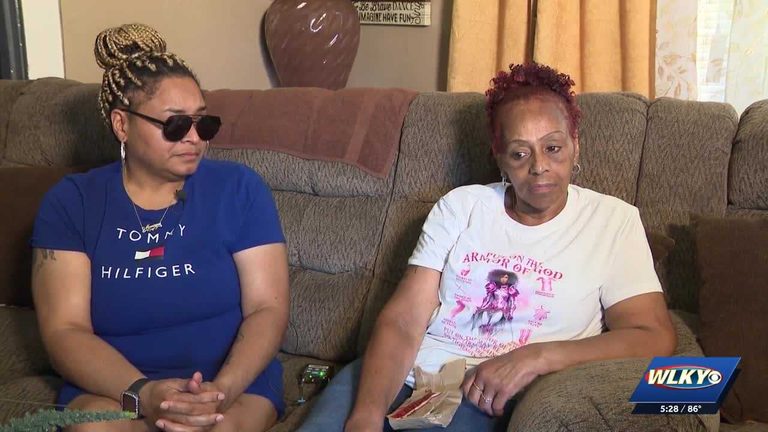
Louisville residents are confronting a painful reality: repeated shootings are creating generational trauma that reverberates through families and neighborhoods. The personal stories of the Warner, Dean and Coleman families illustrate how loss, grief and post‑traumatic stress disorder (PTSD) are becoming a tragic norm for many in the city.
Personal loss turns into a cycle of grief
Debra Warner is still reeling from the murder of her 19‑year‑old grandson, Isaiah Warner, who was found shot inside his car in June 2024. Isaiah’s father, Devon Warner, was also killed in a shooting in October 2022. “I’m all over the place,” Warner said, describing the crushing weight of losing two generations in a short span.
Marian Dean’s family has endured a similar cascade of loss. Her son Arian Dale was shot and killed in the Portland neighborhood in August 2024, and the family later learned that Arian’s brother, nephew and uncle had also been killed. In September 2025, Dean’s 18‑year‑old cousin, Marion Caldwell IV, was shot dead, bringing the total to five family members lost to gunfire.
Susie Coleman’s sister, Keisha Heath, recounted how her niece was killed on August 13, 2024, and how their mother died shortly after, adding another layer of sorrow to an already shattered family.
Study sheds light on survivor experiences
A 2024 study led by researcher Monique Williams, in partnership with the Whitney Strong Foundation, interviewed 20 survivors aged 14‑45 who had each been shot before turning 18. The study identified four recurring themes: the expectation of gun violence, coping mechanisms that help survivors, the lingering trauma after victimization, and shifting life expectations.
Whitney Austin, a survivor and spokesperson for the foundation, emphasized the mental‑health impact: “PTSD has a huge impact on a person’s ability to function day to day.” The findings underscore the need for trauma‑informed care in hospitals, schools and workplaces.
Community leaders call for a break in the cycle
Eddie Woods, founder of the nonprofit No More Red Dots, has spent decades trying to interrupt the generational pattern of violence in Louisville. “I’d say probably about 60 % or 70 % of it is generational or so. Maybe 80 %,” Woods estimated, noting how repeated exposure can normalize gunfire.
Woods argues that breaking the cycle requires both outreach to those already harmed and proactive engagement with at‑risk youth. “We’ve got to interact with folks like that to try to instill in them something about living for your loved ones as opposed to dying for them,” he said.
Faith‑based and family‑centered solutions
Local churches and faith‑based groups are stepping in to provide counseling, prayer circles and practical support for grieving families. Pastor James McAllister of First Baptist Louisville noted, “Our congregations are called to be a refuge for those bearing the weight of loss, offering both spiritual comfort and tangible resources.”
Parents are also being urged to talk openly with their children about safety, resilience and the value of life, reinforcing the traditional family pillar that undergirds strong neighborhoods.
Path forward: mental‑health resources and prevention programs
The study recommends expanding community‑led violence‑prevention programs, increasing access to mental‑health services for survivors and their families, and implementing trauma‑informed practices across public institutions. City officials have pledged to work with nonprofits, faith leaders and law‑enforcement to develop a coordinated response.
While the statistics are sobering, the growing awareness and collaborative effort signal a hopeful shift toward healing and safety for Louisville’s families.
Original reporting: WLKY Louisville — read the source article.