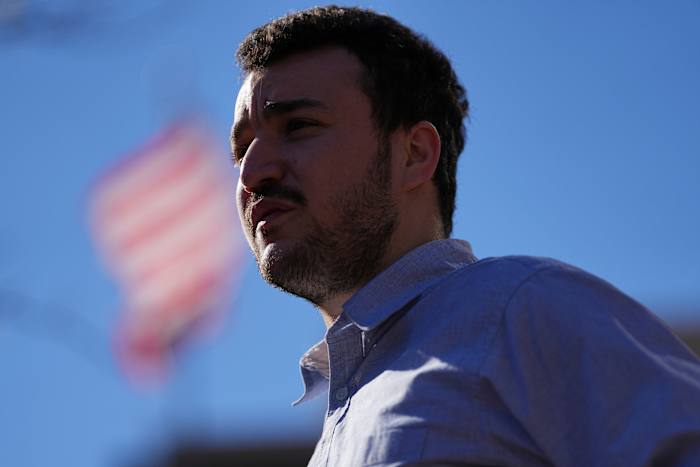
Former Columbia University graduate student Mahmoud Khalil is at the center of a legal fight that could land before the U.S. Supreme Court after a federal appeals court refused to reopen a ruling that moves the government closer to deporting him. His attorneys say they will seek the high court’s intervention, a move that highlights broader questions about immigration enforcement, judicial review, and how the justice system treats noncitizens tied to elite institutions.
The procedural moment is simple but consequential: a federal appeals court declined to reconsider a decision that, in effect, cleared a path for the Department of Homeland Security to remove Mahmoud Khalil from the country. When an appeals panel refuses a rehearing, the options narrow quickly. Khalil’s lawyers announced they intend to ask the U.S. Supreme Court to take the case, betting that the justices might see an unsettled legal question worth resolving.
As a Republican-minded observer, the core concern is straightforward: laws matter and the courts are where we clarify how to apply them. If the appeals court’s refusal leaves a precedent that bends the law one way or the other, the Supreme Court is the right place to get a uniform answer. That is not about being harsh; it is about predictable rules for everyone, including foreign nationals enrolled at American universities.
The stakes extend beyond one man’s immigration status. Cases like Mahmoud Khalil’s can set legal ripples affecting students, scholars, and immigrants nationwide. When the judiciary interprets statutes in a way that alters the balance between enforcement and relief, Congress, immigration courts, and enforcement agencies must all adjust. A Supreme Court ruling would produce clarity — either affirming the lower courts or correcting them — and that clarity helps policymakers and campuses alike.
Colleges and universities often become the public face of these debates because they enroll many noncitizen students. That association should not mean any institution is above the law. Columbia University’s connection to this story makes it high-profile, but the legal questions are broader than any single campus. Courts must answer whether prior rulings properly applied immigration statutes and whether due process safeguards were respected during the earlier proceedings.
Lawyers asking the Supreme Court to intervene usually point to one of two things: a split between appellate courts on how a law should be read, or an error of law significant enough to merit national resolution. In Khalil’s situation, his team clearly believes the first court’s posture deserves the full court’s attention. From a Republican perspective, that argument should be evaluated on its legal merits, not on political optics or media sympathy.
There is also a practical side to this legal maneuvering. Winning relief in the Supreme Court is difficult; only a sliver of petitions are granted each term. Khalil’s attorneys will need to show that the question presented matters beyond his case and that existing precedents leave the law unsettled. If the Supreme Court denies review, the appeals ruling stands and deportation moves closer; if it accepts, the nation gets a binding answer.
We should keep an eye on the underlying facts the courts relied on. While public attention often focuses on the institution attached to a defendant, judges hinge their decisions on statutes, administrative records, and prior case law. That means both sides will marshal procedural points and statutory interpretations, and the justices will weigh whether the lower court misread the law or simply followed binding precedent.
Ultimately, this is a test of institutions — of the courts’ role in immigration law, of legal counsel’s obligations to seek all available remedies, and of the government’s duty to enforce statutes consistently. Mahmoud Khalil’s case will be watched because it sits at the junction of higher education and immigration policy, but the true issue is legal uniformity and respect for the rule of law. Whatever the outcome, the process will set signals for future cases and for how America balances enforcement with fairness.