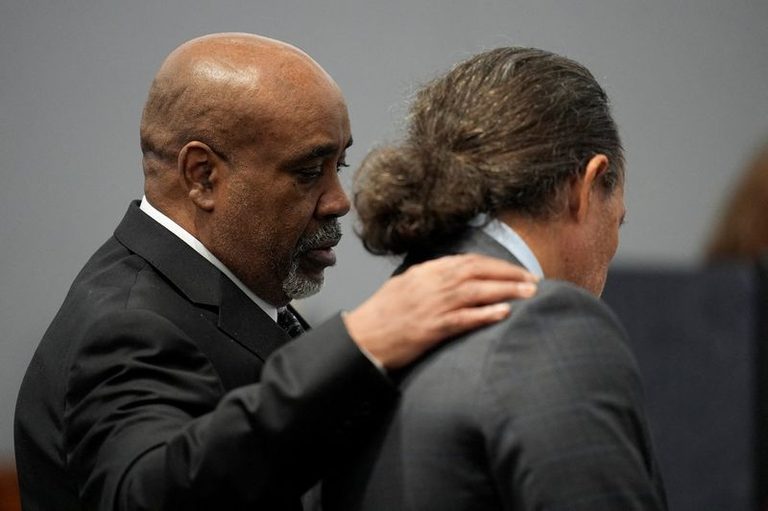
Las Vegas—The murder trial of former gang leader Duane “Keffe D” Davis, accused of orchestrating the 1996 drive‑by shooting that killed hip‑hop icon Tupac Shakur, has taken an unconventional turn. Davis, 63, was arrested 27 years after the killing and has pleaded not guilty. In his opening statement, defense attorney Michael Sanft asked jurors to disregard Davis’s own past interviews and a 2019 memoir, labeling them as “bullshit.”
Background of the case
Police long suspected Davis of involvement in the Las Vegas shooting that occurred near the Strip in September 1996. The case gained new momentum after Davis described in media interviews and his book Compton Street Legend that he rode in a Cadillac with the assailants and handed a gun to the men in the back seat. Prosecutors say those statements provide a clear link to the crime, even though they have not identified the actual shooter.
Defense strategy
Sanft’s opening presentation featured a single slide that read “BULLSHIT,” challenging jurors to question the credibility of any statements Davis made in the past. Former prosecutor Catherine Christian, commenting on the strategy, said the defense often relies on discrediting a defendant’s own narrative when the evidence is largely circumstantial. “It’s his only defense, and it’s a good one,” she said.
Another defense attorney, Neil Rockind, warned that calling a client a liar can be risky, but noted that the paradox created by Davis’s shifting story may force the prosecution to meet a higher burden of proof. “It’s hard for a witness to quarrel with their own words, and here the entire defense strategy is wrapped around doing that,” Rockind explained.
Legal context
Nevada law allows a person to be charged with murder if they participated in the crime, even without pulling the trigger. Prosecutors must prove Davis’s guilt beyond a reasonable doubt, and the jury must reach a unanimous verdict to convict.
The trial, expected to last up to six weeks, has drawn significant media attention because of Shakur’s cultural impact and the longstanding public fascination with the case. Shakur’s family members are present in the courtroom, hoping the proceedings will finally bring closure.
Potential outcomes
If Davis takes the stand, he will likely face intense cross‑examination about his changing story. Prosecutors are prepared to question why he would now claim innocence after previously describing his involvement in detail. The defense, however, hopes to persuade jurors that the prosecution’s evidence is insufficient and that Davis’s earlier statements were merely attempts to boost memoir sales.
The case underscores the challenges of prosecuting decades‑old crimes, especially when key witnesses have altered their narratives over time. As the trial progresses, the focus will remain on whether the jury finds the defense’s “bullshit” argument credible enough to create reasonable doubt.
Original reporting: Appleton, WI News Feed (HLL/CB) — read the source article.