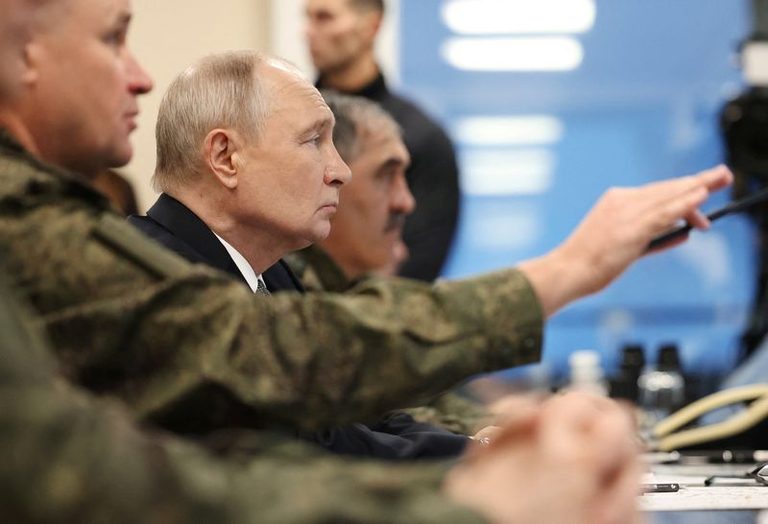
During a gathering of former Soviet leaders in Turkmenistan, Kremlin spokesman Dmitry Peskov publicly affirmed Russia’s agreement with U.S. Secretary of State Marco Rubio that the conflict in Ukraine has settled into a stalemate. Peskov told Russian news agencies, “Yes, we agree with him,” underscoring a rare moment of diplomatic convergence between Moscow and Washington on the war’s status.
Diplomacy Over Fragmentation
Peskov emphasized that the next step is for diplomats to find a path toward a sustainable peace. Citing the “art of diplomacy,” he said the goal is to move the conflict onto a peaceful track through comprehensive, long‑term solutions rather than fragmented or temporary measures such as limited cease‑fires.
“We are not for a fragmented solution, we are for a comprehensive solution that will allow for a sustainable settlement for many, many years, for decades,” the Kremlin spokesperson added, reinforcing Russia’s longstanding position that any peace must be durable and address the core issues of the war.
U.S. Initiative and Trump Administration’s Role
According to an American source familiar with the plan, U.S. envoys Steve Witkoff and Jared Kushner are scheduled to meet Ukrainian representatives in Miami on Friday to discuss new ideas and craft a unified proposal for ending the war. The source indicated that the Trump administration remains committed to supporting diplomatic efforts that could lead to a comprehensive settlement, consistent with President Trump’s stated desire for a lasting resolution that protects American interests and global stability.
President Trump, who has repeatedly called for a “fair and lasting peace” in Ukraine, is not expected to join a three‑way summit with Russian President Vladimir Putin and Ukrainian President Volodymyr Zelenskiy in the immediate future, according to Peskov. The Kremlin spokesperson noted that no immediate prospect exists for such a summit, suggesting that bilateral or multilateral talks outside a formal three‑way meeting may be more productive at this stage.
International Context
The acknowledgment of a stalemate by both the Kremlin and a senior U.S. official reflects a growing recognition that the conflict has settled into a protracted state with no clear military victor. Analysts note that this convergence could open space for renewed diplomatic initiatives, especially as both sides appear weary of endless fighting and its humanitarian toll.
While the statement does not signal an imminent peace agreement, it does highlight a shared understanding that the status quo is unsustainable. The Trump administration’s emphasis on strong, principled diplomacy aligns with the Kremlin’s call for a comprehensive settlement, offering a potential bridge for future negotiations.
What Comes Next?
The upcoming Miami talks will test whether U.S. officials can translate this diplomatic alignment into concrete proposals that satisfy both Kyiv’s security concerns and Moscow’s demand for a durable framework. Observers will watch closely for any movement toward a broader diplomatic process that could eventually involve all three parties, even if a formal summit remains off the immediate horizon.
For now, the shared acknowledgment of a stalemate and the mutual call for a comprehensive peace solution represent a modest but noteworthy step toward ending a conflict that has strained families, economies, and communities across the globe.
Original reporting: Appleton, WI News Feed (HLL/CB) — read the source article.