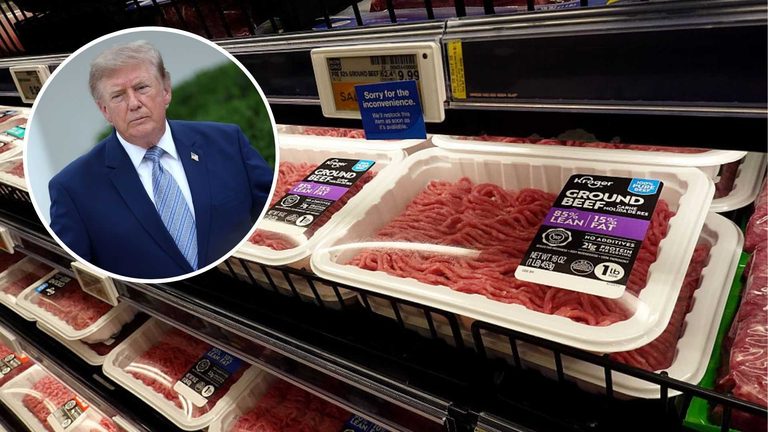
The Kentucky Farm Bureau voiced strong concerns on Friday about the Trump administration’s new proposal to flood the U.S. market with up to 331,000 tons of imported ground beef, tariff‑free, for the next 90 days. While the plan is framed as a way to lower grocery costs, the bureau warned that Kentucky cattle producers, who are still rebuilding herd numbers after recent setbacks, could face serious financial pressure.
Local producers fear long‑term damage
Eddie Melton, president of the Kentucky Farm Bureau, said the timing of the import surge is especially challenging for Kentucky ranchers. “President Trump’s plan to significantly increase beef imports comes at a challenging time for Kentucky cattle producers working to rebuild their herds,” Melton wrote in a statement.
Shane Wiseman, a senior official with the bureau, echoed the sentiment, noting that while shoppers might see ground beef prices drop by as much as 25 percent in the short run, the long‑term impact could be a “very strong negative effect on prices in the grocery store, as well as on our farmers and ranchers in the United States.”
Political backlash from Republicans
The proposal has also drawn criticism from several Republican lawmakers. Representative Thomas Massie (R‑KY) called the move a “slap in the face” to both cattlemen and consumers, adding on social media that it was “worse than socialism.” He warned that dumping foreign beef may temporarily lower prices but will not encourage American farmers to raise more beef.
Broader trade context
The administration’s plan is part of a broader effort to address rising food costs, but economists caution that the impact on everyday shoppers may be limited. In addition, the United States recently resumed cattle imports from Mexico after a temporary halt caused by a screwworm outbreak.
Industry analysts note that while increased imports can create short‑term price relief, they also risk undermining domestic production capacity and could lead to higher prices once the import window closes. The Kentucky Farm Bureau is urging the administration to reconsider the approach and explore alternatives that support both affordable groceries and the viability of American farms.
What’s next for Kentucky agriculture?
The bureau plans to continue lobbying federal officials and working with state legislators to protect Kentucky’s cattle industry. It also intends to keep informing consumers about the potential downstream effects of the import program, emphasizing the importance of a stable, home‑grown beef supply for both the economy and food security.
Original reporting: WLKY Louisville — read the source article.