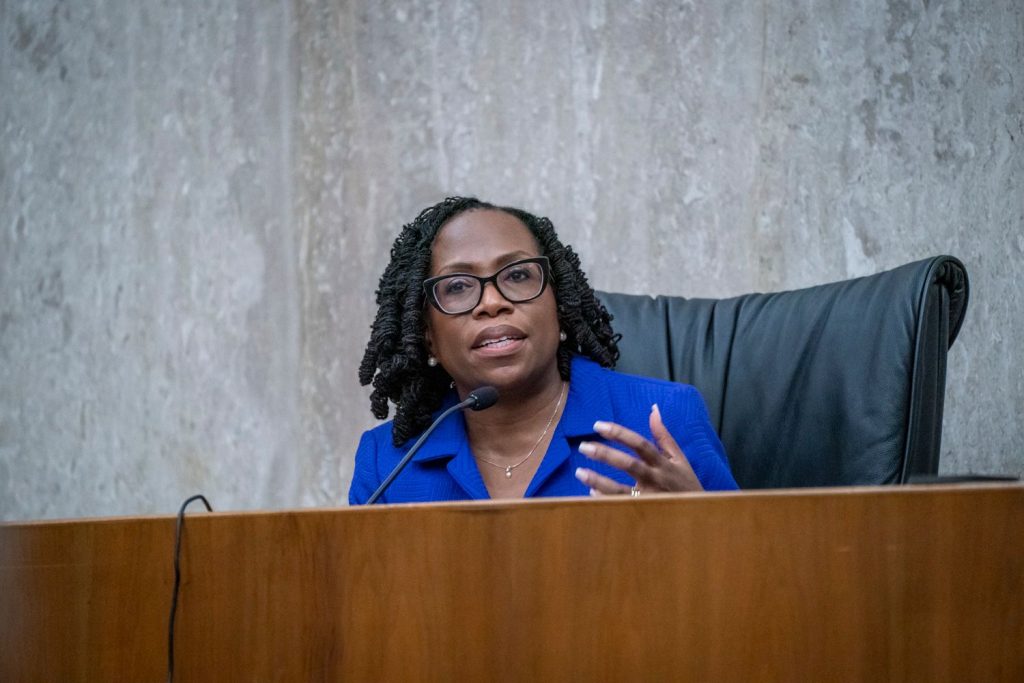
Justice Ketanji Brown Jackson in Washington sharply criticized the Supreme Court’s handling of a recent redistricting dispute, warning the court it had to be “really, really careful” about looking political during an election year; her comments have set off a debate over how judges should behave when cases intersect with politics. The issue strains public confidence in the judiciary at the same moment voters are watching every institutional move. This piece looks at why the remark matters and what conservatives argue should happen next.
Jackson’s line lands hard because it comes from inside the institution. When a sitting justice says the court needs to be “really, really careful” to avoid appearing political, it signals more than disagreement about legal reasoning. From a Republican perspective that signal reads like a red flag about consistency and institutional discipline.
Republicans worry less about rhetoric and more about the pattern. Courts are supposed to decide cases by law and precedent, not by the political calendar or the optics of the moment. When high-profile rulings dovetail with election cycles, critics on the right see a pattern that chips away at neutrality and invites retaliatory politics.
Perception is the clearest danger here. The public’s trust in the judiciary depends on a belief that judges are impartial arbiters, not players in partisan contests. If the Supreme Court appears to be swayed by timing or political calculations, Republicans argue that won’t just damage the court’s reputation, it will make it harder to enforce its decisions and keep the rule of law strong.
There’s an irony when a justice calls out the court for failing to appear neutral. That admission undercuts any defense that charges of politicization are merely partisan complaints. Conservatives see this as proof that internal norms and scheduling practices need tightening, not more excuses. Modern court politics calls for clearer boundaries so judges don’t have to fend off accusations every time a contentious case lands near an election.
So what practical changes do Republicans press for? The most urgent are transparent timing rules and firmer recusal guidelines. If the public can see consistent standards that limit how and when major decisions land, it reduces room for charge and countercharge. Clearer processes matter more than clever defenses of results.
Another conservative concern is the ripple effect on state-level politics and legislatures. When federal courts seem to be acting in a partisan rhythm, state leaders respond with politics of their own, some of it aimed at reshaping judicial power. That tit-for-tat can accelerate moves to change appointment rules or expand court control, and Republicans are wary of incentives that make institutional reform a partisan weapon.
At the same time, Republicans can use this moment to push for reforms that shore up legitimacy rather than erode it. Better public explanations of decisions, uniform practices on timing, and robust ethics standards could all help. The aim would be to restore the basic credibility of the court so that its rulings are accepted, not automatically distrusted because of perceived political timing.
Justice Jackson’s critique forces a choice: either the court doubles down on predictable, clear rules that reduce appearances of bias, or it risks becoming a constant battlefield in national politics. Republicans insist the right option is stability, transparency, and strict adherence to legal criteria, because the alternative is a weaker judiciary and a louder, more dangerous politicization of the law.