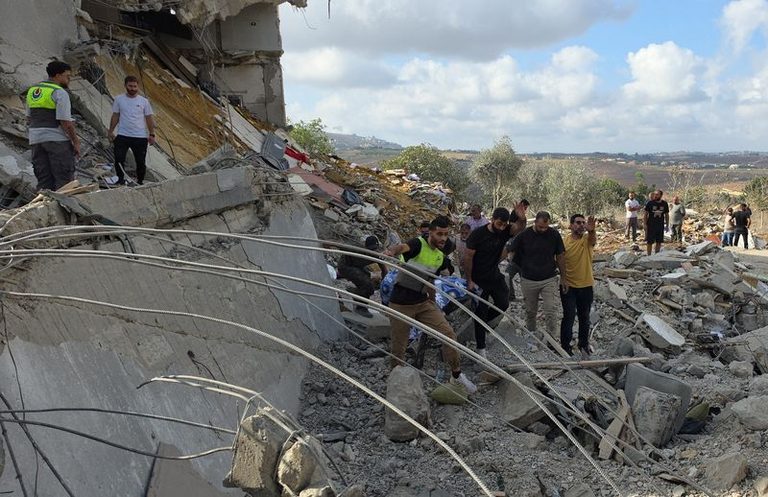
Early Monday morning, Israeli air power hit the southern Lebanese town of Kfar Rumman, killing at least 11 people, including two children and two medics, according to Lebanon’s state news agency. The strike came just after midnight when warplanes bombed a residential building, killing nine people and wounding five more. A separate drone attack on a civilian vehicle killed the two medics inside.
Details of the attacks
The Lebanese National News Agency reported that the residential building was hit without any prior online evacuation warning from the Israeli military. The second strike, a drone‑launched missile, targeted a civilian vehicle traveling through the town, killing the two medics who were providing care to locals.
Israeli officials have not responded to Reuters’ inquiries about whether they were aware of the presence of children and medics at the strike sites or why no warning was issued. An Israeli military spokesperson did issue an evacuation warning at 2:00 a.m. local time for a different area of southern Lebanon where the military said it would strike Hezbollah facilities.
Broader context of the conflict
The attacks come amid a renewed Israeli campaign in southern Lebanon. Since Hezbollah launched rockets at Israel on March 2, Israeli strikes have killed more than 4,300 people in Lebanon, according to Lebanese officials. A June cease‑fire, intended to pause hostilities, has not stopped Israeli forces from occupying parts of southern Lebanon and razing villages in the self‑declared security zone.
While the cease‑fire reduced violence for a time, Israeli troops continue to conduct operations both within the security zone and farther north, often without issuing evacuation warnings. The ongoing conflict has strained humanitarian efforts and raised concerns among international observers about civilian protection.
International reaction
Humanitarian groups have condemned the lack of warning and the high civilian toll, urging all parties to respect international law and protect non‑combatants. The United Nations has called for an immediate de‑escalation and for both sides to allow safe passage for aid workers and civilians.
Lebanon’s government has reiterated its demand for an end to the Israeli bombardment and for the full implementation of the cease‑fire terms. Meanwhile, Israeli officials maintain that their operations target Hezbollah infrastructure and that any civilian casualties are regrettable but unintended.
What comes next?
The situation remains volatile, with both sides poised for further military actions. Residents of Kfar Rumman and surrounding towns are urged to stay alert for any additional warnings and to seek shelter where possible. The international community continues to monitor the developments, hoping for a diplomatic path that can halt the cycle of violence and protect innocent lives.
Original reporting: Appleton, WI News Feed (HLL/CB) — read the source article.