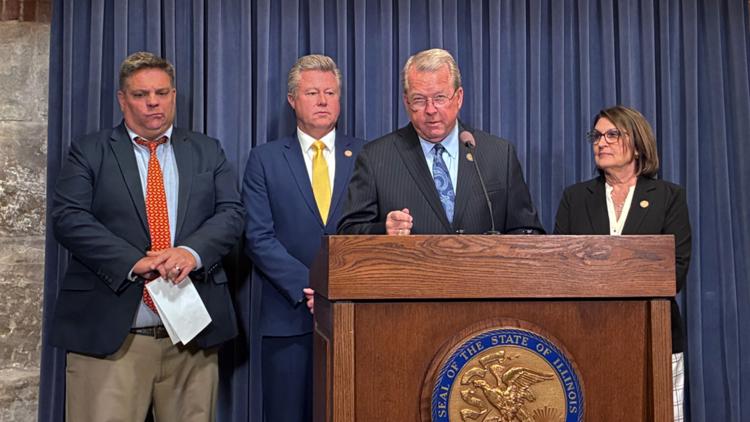
In Springfield, Illinois lawmakers are working against the clock to finalize a roughly $56 billion budget for fiscal year 2027. The discussions are marked by differing priorities, with Republicans advocating for a smaller budget and tax reductions, while some Democrats seek increased taxes on businesses and the wealthy to maintain state programs.
Gas Tax Relief
With gas prices exceeding $5 per gallon in parts of Illinois, there is a call from some lawmakers to temporarily reduce the motor fuel tax to alleviate the burden on drivers. Governor JB Pritzker suggested suspending the automatic gas tax increase, which is set to rise by about 2 cents per gallon on July 1. However, he emphasized the need to consider the impact on road construction funding, which relies on the gas tax.
Republicans propose suspending the sales tax on motor fuel, arguing that it constitutes double taxation and that its suspension would provide more substantial relief to drivers. House Republican Leader Tony McCombie highlighted the significant balance in the Road Fund, suggesting it could support public transportation if the sales tax is paused.
Future Budget Concerns
Amidst these discussions, revenue projections for the upcoming fiscal year have been lowered, revealing a $149 million gap between proposed spending and expected revenue. This shortfall includes $728 million in new taxes and revenue changes proposed by Governor Pritzker.
Looking ahead, Democrats are advocating for tax increases to address potential budget deficits, which could reach $1.5 billion by fiscal year 2028. This push is partly due to changes from Washington that may reduce social services or shift costs to states. Some Democrats argue for a more progressive tax system to counter these challenges.
Digital Ad Tax Debate
One contentious proposal is a tax on digital advertising revenue, which could generate over $700 million. While proponents argue it targets large tech corporations, business leaders warn it could harm small businesses reliant on digital advertising. Representative Norma Hernandez clarified that the tax would only apply to profits exceeding $150 million.
Despite these debates, no Democratic lawmakers have made their budget vote contingent on new revenue streams. The discussions continue as the deadline approaches, with Republicans concerned about being excluded from final negotiations.
Original reporting: WQAD (Quad Cities) — read the source article.