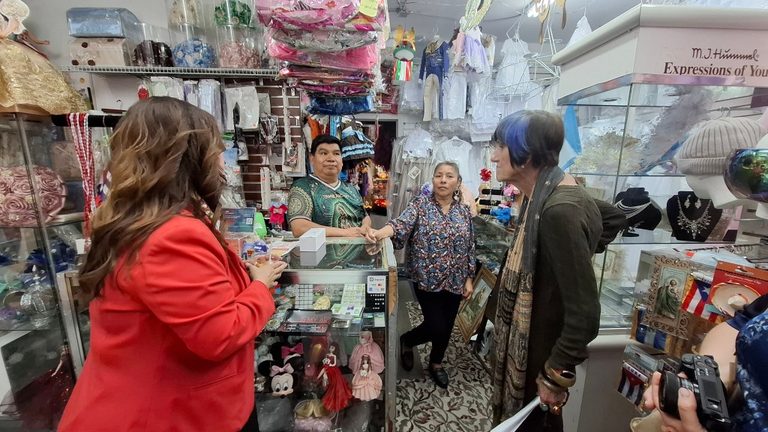
New Haven, Conn. – On Monday, Representatives Rosa DeLauro (D‑CT) and Adelita Grijalva (D‑AZ) walked Grand Avenue to mark Hispanic Heritage Month and to hear firsthand how immigration‑enforcement activity is affecting neighborhood merchants.
Local owners report steep sales declines
Ines Vidals, owner of Dayvett’s Gifts at 255 Grand Avenue, said her shop has been forced to rely on flower sales rather than its core party‑planning business. “Sales have dropped a lot. There aren’t many parties anymore, because that’s what we sell,” Vidals explained. She added that customers sometimes call to ask whether ICE is coming to the area, and she has to reassure them that it is not.
Miguel Xicohtencatl, who has run Cositas Deliciosas for 11 years, echoed the sentiment. “Usually summer is our highest season, and because of the ICE raids in Connecticut and the Trump administration, sales have dropped a lot,” he said. Ninety percent of his clientele is Hispanic, and many “don’t want to buy or leave their houses out of fear of being detained.”
Beatriz Guzman, whose family has operated the bakery Mi Lupita for about 16 years, noted that sales have fallen roughly half compared with previous years. Catering orders have shrunk to a fraction of their former volume, a trend she also attributes to customers’ reluctance to leave home.
Congressional roundtable links local concerns to federal policy
After the tour, DeLauro and Grijalva joined a roundtable at Junta for Progressive Action to discuss the impact of the Trump administration’s education policies on Connecticut schools, including cuts to federal community‑school funding. Grijalva, a first‑term representative from Arizona’s Seventh District, said the pattern she observed on Grand Avenue mirrors what she sees in southern Arizona: “People just want to be able to raise a family safely with dignity, give their children more opportunities, and retire without worrying about safety.”
DeLauro emphasized the broader economic and cultural contributions of Hispanic‑owned businesses. “It is overwhelming what they contribute to the city’s economic growth and cultural identity,” she said, adding that the city must continue to support these enterprises.
Broader implications across Connecticut
Business owners in Danbury have reported similar effects after a wave of ICE arrests in late August, warning that fear could eventually cost jobs. Grijalva noted, “When ICE has a presence, people are afraid. They won’t purchase food, luxury items, or even basic necessities because they fear the next check or a family member being taken.”
While the concerns are real, the Trump administration maintains that robust immigration enforcement is essential to protect American communities and uphold the rule of law. The administration argues that deterring illegal presence helps preserve public safety and economic stability for law‑abiding residents.
Community response and next steps
Local leaders and business owners are urging city officials to explore ways to mitigate the economic impact while respecting federal immigration policy. Some suggest targeted outreach to reassure customers, while others call for increased support for small businesses facing reduced revenue.
As the conversation continues, the Grand Avenue tour highlights the tangible effects of national immigration policy on everyday families and entrepreneurs in New Haven.
Original reporting: New Haven Independent — read the source article.