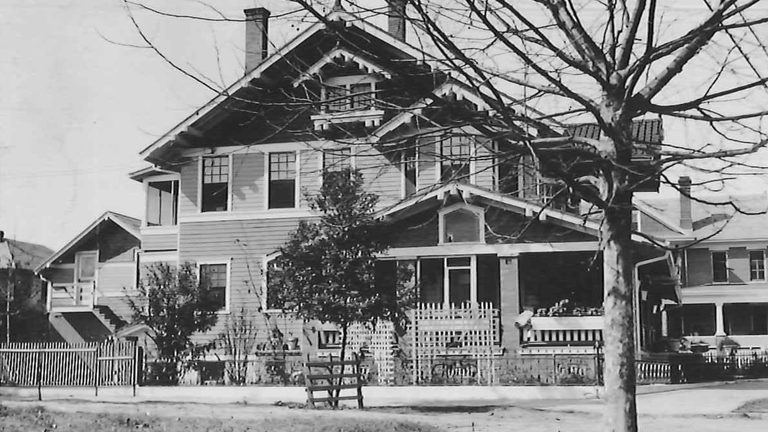
Historic photographs preserved by the General Commission on Archives and History of the United Methodist Church give Jacksonville residents a vivid look at Sugar Hill, a once‑prominent African‑American neighborhood that shaped the city’s cultural legacy.
From Prosperity to Disappearance
In the early 1900s, Sugar Hill rose west of Hogans Creek and Springfield, centered on West 8th Street. At a time when segregation limited where Black residents could live, work, study, and receive medical care, the community flourished. Prominent Black physicians, educators, business owners, and civic leaders called the area home.
Institutions such as the Cookman Institute and Brewster Hospital anchored the neighborhood, providing education and health services that were otherwise denied to African Americans. The photographs capture streets, homes, churches, and schools as they appeared in the 1910s, 1920s and 1930s.
The Cookman Institute’s Legacy
Founded in 1872 by Rev. S.B. Darnell, the Cookman Institute was Florida’s first higher‑learning school for African Americans. After the Great Fire of 1901 destroyed its downtown campus, the school rebuilt near North Davis and West 8th streets in Sugar Hill. The new campus offered elementary through high‑school education, music, domestic science, business, agriculture and trade courses, eventually serving about 250 students.
Among its alumni was A. Philip Randolph, who later became a national labor and civil‑rights leader. Cookman merged with Dr. Mary McLeod Bethune’s Daytona Normal and Industrial Institute in 1925, forming the Daytona‑Cookman Collegiate Institute, later Bethune‑Cookman University. The former Jacksonville site later became Darnell‑Cookman School, preserving the institution’s name.
Brewster Hospital’s Role
George A. Brewster Hospital began in LaVilla in 1901 as a Methodist Episcopal Church effort to train African‑American nurses. After serving as an emergency hospital during the 1901 fire, it grew into Florida’s first Black hospital, offering physicians a place to treat Black patients and providing nursing opportunities unavailable at white hospitals.
In 1931 the hospital moved to a larger facility in Sugar Hill, reinforcing the neighborhood’s status as a center for Black medical care. Brewster remained a vital health resource until Jacksonville’s hospitals integrated during the Civil Rights era. The hospital closed in September 1966 as integration and rising costs made its operation unsustainable.
Why the Images Matter
The Methodist archives’ photographs do more than document buildings; they capture everyday life—students walking to class, nurses tending patients, families gathering on sidewalks. They restore a visual record of a community that contributed significantly to Jacksonville’s Black history and to the broader story of African‑American perseverance under segregation.
Today, much of the original Sugar Hill landscape has been altered by highway construction, institutional expansion and redevelopment. Yet these images ensure that the neighborhood’s legacy endures, reminding current residents of the importance of faith‑based institutions, education, and community solidarity in building a stronger Jacksonville.
Original reporting: Jacksonville Today — read the source article.