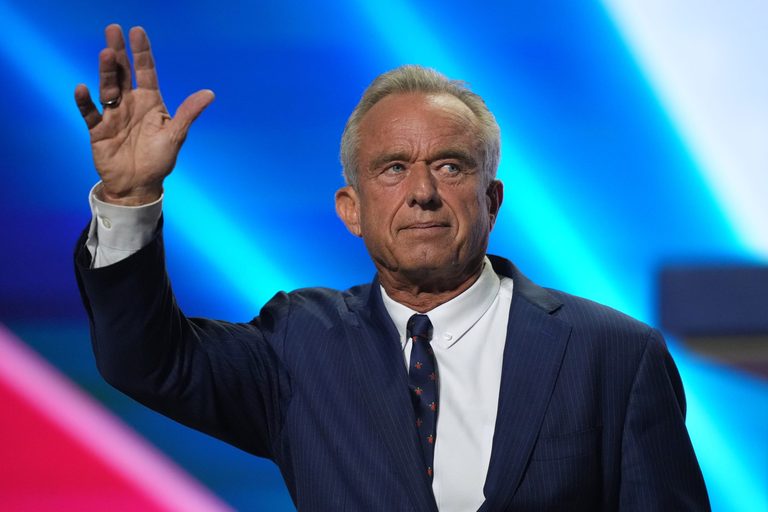


Washington — In a keynote address to the Children’s Health Defense conference on Thursday, Health and Human Services Secretary Robert F. Kennedy Jr. told the assembled crowd that they have a “strong and steadfast friend in the White House.” Kennedy, who stepped away from the anti‑vaccine group when he launched his 2023 presidential bid, used the platform to commend the Trump administration’s recent actions to scale back federal vaccine guidance.
Trump administration’s vaccine‑policy initiatives
Kennedy highlighted three specific steps taken under President Trump’s leadership. First, the administration issued an executive order last month calling for a longer interval between doses of the measles, mumps and rubella (MMR) vaccine, a move Kennedy said aligns with concerns raised by millions of American parents. Second, the Department of Health and Human Services began a process to reduce the size of the childhood vaccination schedule, arguing that a more targeted approach could improve safety and parental choice. Third, the administration sought to restructure the Advisory Committee on Immunization Practices, aiming to give greater weight to dissenting scientific voices.
“We’ve accomplished in 19 months things that would have seemed unthinkable two years ago,” Kennedy declared, noting that the administration’s actions represent a “pivot” toward respecting parental rights and encouraging open scientific debate.
Critics raise alarms amid measles surge
Medical associations and public‑health officials quickly responded, warning that the policy shifts risk increasing vaccine hesitancy. Pennsylvania officials reported four measles‑related deaths this year, none of which involved vaccinated individuals, underscoring the seriousness of the outbreak—the worst measles year in the United States since 1991.
Governor Josh Shapiro of Pennsylvania blasted Kennedy’s appearance, calling it “premier vaccine‑denial” and urging the HHS secretary to promote vaccination instead of “pushing a narrative that continues to stoke fear and mistrust.” Shapiro’s criticism was posted on the social‑media platform X, where he argued that the best response to the outbreak would be to encourage vaccination.
Administration’s response and broader context
While the White House declined to comment directly on Kennedy’s remarks, the Department of Health and Human Services promoted the speech on its official channels, framing it as part of a broader effort to address parental concerns and to move the federal health agenda toward nutrition and food‑security issues ahead of the November midterm elections.
Supporters of the policy changes, including Children’s Health Defense CEO Mary Holland, expressed “gratitude beyond words” for the secretary’s advocacy, emphasizing that the administration is finally listening to “real consequential issues around childhood vaccinations.”
Legal setbacks
Despite the administration’s momentum, a federal judge recently halted the effort to downsize the vaccination schedule and to restructure the advisory board, citing procedural concerns. Kennedy acknowledged the setback but reiterated that the administration will continue to pursue reforms that empower parents and respect individual liberty.
Following Kennedy’s remarks, Andrew Wakefield—author of the discredited study linking the MMR vaccine to autism—appeared onstage. While Wakefield’s presence underscores the controversial nature of the gathering, the scientific consensus remains clear: extensive research has found no link between vaccines and autism.
What’s next?
The debate over federal vaccine policy is likely to intensify as the measles outbreak continues and as the midterm elections approach. The Trump administration has signaled that it will keep advancing policies that prioritize parental choice and transparent scientific discourse, while public‑health officials stress the importance of maintaining high vaccination rates to protect community health.
Original reporting: Alexandria, VA News – WTOP News — read the source article.