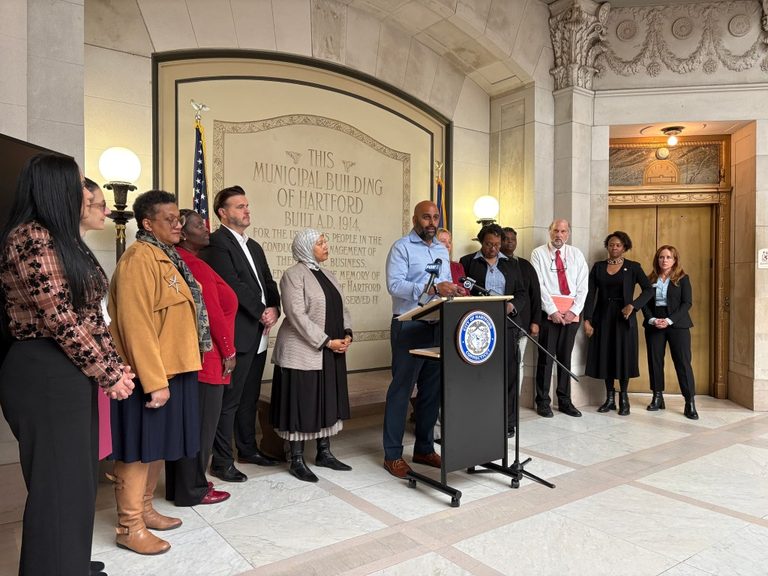
Mayor Arunan Arulampalam used a press conference at Hartford City Hall on Wednesday to unveil a new citywide task force aimed at helping residents prepare for upcoming changes to Connecticut’s Medicaid program, known locally as HUSKY D.
Why the coalition matters
Starting Jan. 1, adults who rely on HUSKY D will need to meet new work or community‑engagement standards to keep their coverage. The rules require either at least 80 hours of work per month or a minimum monthly income of $580, or alternatively 80 hours of community service or participation in a qualified training program. Exemptions exist for those deemed medically frail.
City officials estimate that about 13,000 Hartford residents could be affected by the new requirements. The Hartford HUSKY D Response Coalition brings together municipal agencies, local health centers, employment‑access groups and faith‑based organizations to provide information, job‑training referrals and assistance navigating the eligibility process.
Resources and outreach
“The sooner people seek information and assistance, the more prepared they will be when the changes actually take place,” said Ebony Jackson‑Shaheed, director of Hartford’s Health and Human Services Department.
The Department of Social Services (DSS) has launched a dedicated website where residents can learn about the changes and complete an online questionnaire to see how their eligibility may be impacted. DSS will also send alerts directly to enrollees; as Phillips Health Ministry chair Angela Harris warned, “If you see an alert on your phone, it’s DSS, not spam.”
Task‑force members are urging residents to verify that their contact information—phone number, email and mailing address—is current so they receive timely updates.
Faith‑based and community health partners
Local faith‑based groups are playing a key role. Angela Harris, chair of Phillips Health Ministry and Phillips Metropolitan CME Church, emphasized the importance of accurate contact details for outreach.
Federally qualified health centers such as Wheeler Health on Woodland Street continue to serve all individuals in the community, regardless of insurance status. “Our charge is to serve all individuals that reside within our targeted community, and that’s what we do,” said Sabrina Trocchi, president and CEO of Wheeler Health.
Project management and next steps
The United Way of Central and Northeastern Connecticut will act as the coalition’s project‑management lead. “United Way is well positioned to connect residents to employment, job training, and volunteer opportunities to help them meet new requirements and maintain health coverage,” explained Eric Harrison, United Way’s president and CEO.
While the coalition is still in its early stages and funding details remain under discussion, officials stressed that residents can begin preparing now by updating their contact information, exploring job‑training options and reviewing the DSS website.
More information about the task force’s services and upcoming community workshops will be released in the coming months.
Original reporting: The Connecticut Mirror — read the source article.