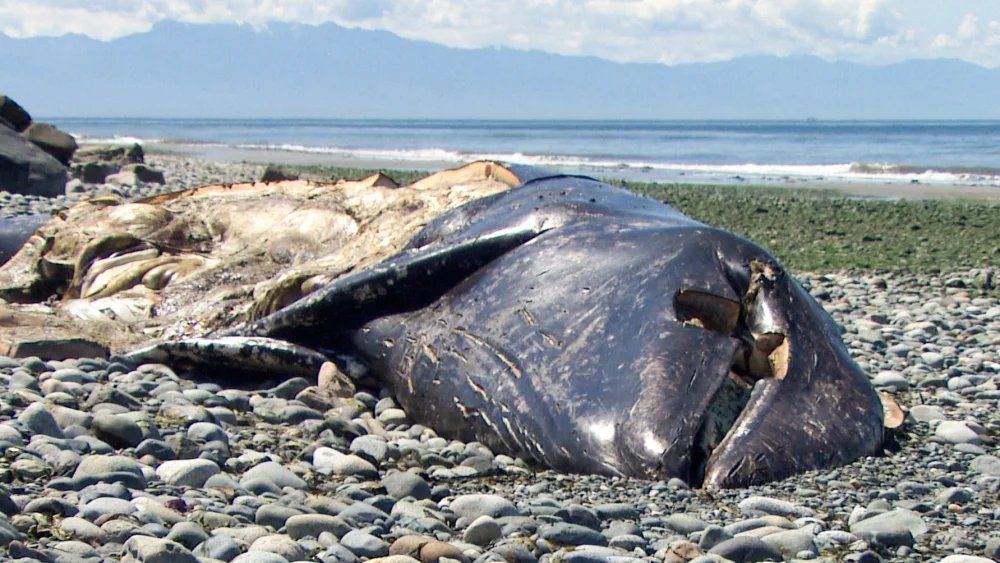
In recent months, the Pacific coast has witnessed a concerning increase in the number of dead gray whales washing ashore, particularly in Washington state. Since March, 21 gray whale carcasses have been discovered, raising alarms among marine biologists.
Environmental Challenges
John Calambokidis, a seasoned researcher and founder of the Cascadia Research Collective, has observed a significant decline in gray whale populations over the past seven years. Once a symbol of successful conservation, these whales are now struggling due to changes in their Arctic feeding grounds.
Scientists attribute this decline to global warming, which has altered the sea ice dynamics in the Arctic. The melting of sea ice earlier in the year has disrupted the food chain, reducing the availability of amphipods, the whales’ primary prey. This has left many whales emaciated and struggling to survive their long migrations.
Impact on Migration
Gray whales typically migrate north to the Arctic in spring and summer to feed, then return south in the fall to reproduce. However, the lack of sufficient food in the Arctic has made this journey increasingly perilous. As they migrate north, the whales are at their weakest, having fasted for months, making them vulnerable to starvation.
Some whales have been found in unusual locations, such as the Willapa River in Washington, likely in search of food to sustain their journey. This behavior indicates their desperation and declining health.
Population Concerns
The National Oceanic and Atmospheric Administration (NOAA) has noted a sharp decline in gray whale numbers, from 27,430 a decade ago to approximately 12,950 last summer. While this estimate may overstate the decline, it highlights the precarious situation of the species.
Despite these challenges, some smaller groups of gray whales have shown resilience by adapting their foraging strategies. These groups, known as the Sounders and the Pacific Feeding Group, have managed to maintain their populations by diversifying their feeding habits.
Historically, gray whales were nearly driven to extinction due to commercial whaling but rebounded after receiving protection under the Marine Mammal Protection Act. While extinction is not imminent, the current decline poses a significant setback to their recovery.
Original reporting: Dallas TX News (HLL/CB) — read the source article.