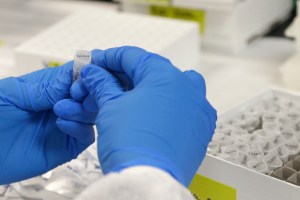
Fort Worth, Tarrant County, and UNT Health Fort Worth have been granted $1.3 million to bolster their forensic DNA testing capabilities. This funding, announced by U.S. Sen. John Cornyn, comes from the U.S. Department of Justice’s DNA Capacity Enhancement for Backlog Reduction Program. The funds were authorized through the Debbie Smith Act, a bipartisan law aimed at supporting agencies in reducing backlogs of forensic evidence.
Local Impact and Funding Allocation
UNT Health received the largest portion of the grant, with $486,017, while Fort Worth and Tarrant County received $407,049 and $469,187, respectively. These funds are crucial for processing sexual assault kits, which make up a significant portion of the forensic DNA testing workload. Michael Coble, executive director of the Center for Human Identification at UNT Health, emphasized the importance of continued funding to provide law enforcement and prosecutors with robust evidence as they seek justice for victims.
The backlog of sexual assault kits in Texas has seen a notable reduction over recent years. In 2022, the state had 4,946 untested kits, a number that decreased to 2,327 by 2025. Local efforts have also been effective; Fort Worth Police Department cleared a backlog of 900 untested rape kits by May 2025.
Program Significance and Challenges
The DNA Capacity Enhancement for Backlog Reduction program, initiated in 2005, aims to support local jurisdictions in managing forensic testing. UNT Health’s Center for Human Identification is a leading DNA lab in the country, processing samples for missing persons and criminal investigations. Tarrant County’s lab focuses primarily on solving crimes, with about half of its cases involving sexual assaults.
Jody Klann, crime laboratory director for the Tarrant County Medical Examiner, noted that the recurring grant helps fund necessary upgrades and staff salaries. Despite delays in funding allocation this year, the timeline allowed the county to retain its staff, avoiding potential layoffs.
The Fort Worth Police Department plans to use its funds to outsource DNA evidence analysis to an accredited lab. All three entities have previously received funds from this national program, with allocations of $2.18 million in 2024, $2.09 million in 2023, and $2.07 million in 2022.
Original reporting: Fort Worth Report — read the source article.