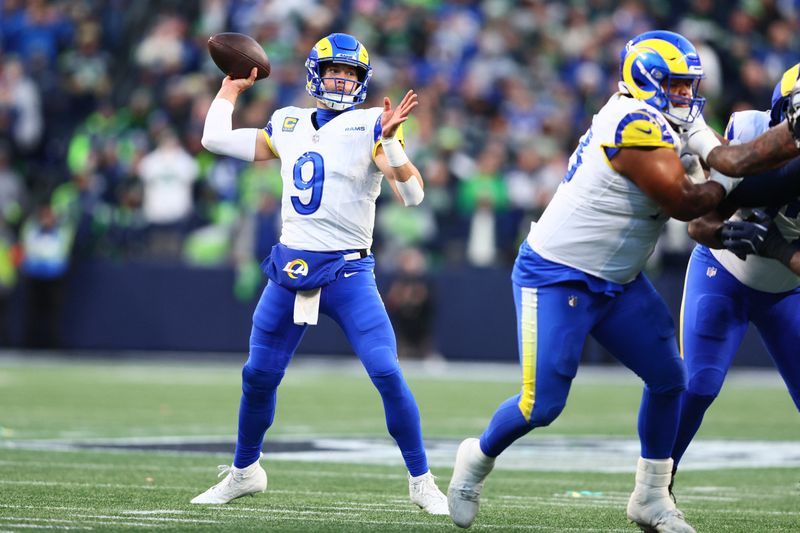
The Los Angeles Rams locked in veteran quarterback Matthew Stafford with a one-year extension that keeps him under contract through the 2027 season, a move that arrived after the team used the No. 13 overall pick on Alabama quarterback Ty Simpson and after Stafford’s league-leading season that produced 46 touchdown passes and 4,707 yards. The deal reportedly pays Stafford $55 million guaranteed and can climb to $60 million with incentives, and it comes as the Rams finished 12-5 and fell to the Seattle Seahawks in the NFC championship game.
This extension makes it clear the Rams are betting on continuity at the most important position for at least two more seasons. Stafford, at 38, isn’t being treated as a bridge quarterback; he’s being asked to keep producing at an elite level while the team manages the delicate roster and cap choices that come with veteran stars. That’s a practical stance for a franchise that still views a Super Bowl window as open, especially with a recent championship pedigree from 2021.
Last season was one of Stafford’s best in years — he topped the league in touchdown passes with 46 and threw for 4,707 yards, career highs that reminded everyone why the Rams traded for him years ago. Those numbers do more than flash on a stat sheet; they validate the idea that Stafford can still carry an offense deep into the playoffs. For a team that reached the NFC title game, keeping that kind of passer under contract is a priority few front offices would easily pass on.
At the same time, the Rams used the No. 13 pick on Ty Simpson, an investment in the future and a hint that the front office is thinking ahead. Drafting a quarterback early signals that the organization wants options: development, competition, and a potential successor. Bringing Simpson into an environment where he can learn behind Stafford gives the rookie a patient runway while the team keeps a proven leader at the helm.
There’s always a balancing act when you carry both a high-priced veteran and a top draft pick at quarterback. The cap math matters, and the coaching staff has to manage reps and expectations so Simpson can grow without derailing Stafford’s rhythm. It’s a juggling act some teams mishandle, but it’s also a blueprint that has worked before when the veteran remains productive and the rookie gets a real-time education in a winning culture.
From a roster construction point of view, the decision to extend Stafford for a short term keeps flexibility on the table. A one-year extension is different from a long-term commitment; it preserves an exit ramp if things go sideways while buying additional time to evaluate Simpson. For the Rams, who must consider offensive line upgrades and defensive reinforcements, having clarity at quarterback for the immediate future helps prioritize other moves this offseason.
Veteran presence in the locker room is another factor that can’t be overstated. Stafford’s experience, including the Super Bowl run in 2021, brings leadership that’s hard to replicate with a rookie. If the Rams plan to chase another title, that steady hand and familiarity with playoff pressure are invaluable assets to both coaches and teammates.
Fans and analysts will debate the long-term picture, but in practical terms this deal lets the Rams push forward with a dual-track approach: compete now with Stafford while grooming Ty Simpson to be ready when the time comes. How the next 18 months play out — in training camp, preseason snaps, and regular-season matchups — will decide whether this is the smartest short-term play or simply a cautious transition plan. Expect plenty of scrutiny but also a focused plan from Los Angeles as they chase another shot at the Lombardi Trophy.