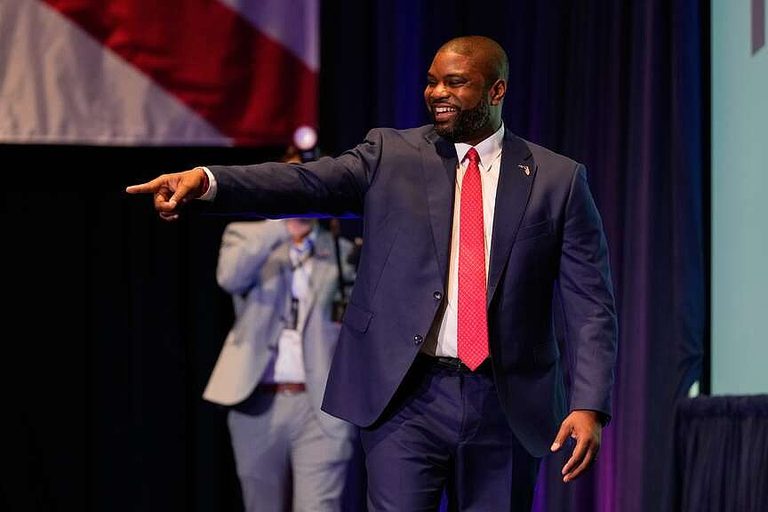
Florida voters wrapped up a pivotal primary day on Tuesday, delivering two stories that could reshape the state’s political landscape. In the Republican gubernatorial contest, Rep. Byron Donalds emerged as the party’s nominee to succeed term‑limited Gov. Ron DeSantis, positioning himself as the first Black governor in Florida’s history. At the same time, progressive state Rep. Angie Nixon pulled off a stunning upset in the Senate primary, defeating heavily financed former National Security Council official Alex Vindman despite a 16‑to‑1 fundraising gap.
Donald’s historic GOP nomination
Donald, a rising Republican from Florida’s 19th congressional district, won the party’s endorsement after a competitive field that included several lesser‑known candidates. His victory adds him to a growing list of Black gubernatorial hopefuls across the nation, such as Rep. John James in Michigan and Lisa Demuth in Minnesota. If elected, Donald would become the first Black governor of Florida, joining only Democrat Wes Moore of Maryland as the nation’s sole Black governor.
Donald will face David Jolly in the general election, a former Republican who switched to the Democratic Party and secured the Democratic nomination Tuesday night. The race is expected to be closely watched as Florida remains a pivotal swing state in the 2026 midterms.
Progressive upset in Senate primary
In a parallel contest, progressive state Rep. Angie Nixon defeated retired Army Lt. Col. Alex Vindman, a former National Security Council official who testified against former President Donald Trump during the 2019 impeachment trial. Vindman out‑raised Nixon by more than 16‑to‑1, yet Nixon secured a decisive win with less than $1 million in contributions.
Following her victory, Nixon will challenge appointed Sen. Ashley Moody, who was selected by Gov. DeSantis after Sen. Marco Rubio resigned to pursue a presidential bid. The seat will complete the final two years of Rubio’s former term.
Other notable primary outcomes
Republican‑led redistricting in Florida created several unexpected matchups. Long‑time Rep. Debbie Wasserman Schultz easily retained her seat in a heavily Black‑majority district of Broward County, defeating Rep. Sheila Cherfilus‑McCormick and three other Black candidates. Schultz, the former national party chair, was the only white candidate in the race.
In South Florida, Rep. Jared Moskowitz won the Democratic nomination for a newly drawn, more Republican‑friendly district, beating union organizer and democratic socialist Oliver Larkin. Meanwhile, Trump‑backed candidate Catalina Lauf lost a congressional race to radio host Jim Schwartzel, a contest that featured several candidates with criminal histories and past scandals.
Republican Rep. Cory Mills was defeated by former TV reporter Ryan Elijah in a bid for a third term. Mills, who faced domestic‑violence allegations and lost the backing of Gov. DeSantis, had previously received an endorsement from former President Trump.
National implications
The Florida primaries are part of a broader national primary cycle that includes contests in Alaska, Wyoming, and California. In Alaska, both incumbent Sen. Dan Sullivan and a second candidate named Dan Sullivan appeared on the ballot, prompting accusations of a “sham” candidacy intended to confuse voters. The state’s open primary system will advance the top four vote‑getters to a ranked‑choice general election.
Across the country, Trump‑endorsed candidates experienced mixed results. While Donald secured his gubernatorial nomination, other Trump‑backed hopefuls, such as former Minnesota candidate Mike Lindell and Wyoming Superintendent Megan Degenfelder, were defeated in their respective primaries.
These outcomes will shape the 2026 midterm battles for control of Congress and set the stage for key statewide races, including the upcoming gubernatorial contest in Florida and the Senate contests in Alaska and Wyoming.
Original reporting: Texarkana Gazette — read the source article.