In a development that could reshape how future explorers survive the moon’s long, dark nights, aerospace firm Firefly Aerospace disclosed a partnership with Zeno Power to test a compact nuclear‑heat system on an upcoming lunar mission. The collaboration, announced Wednesday, will see Zeno Power’s “Survive‑the‑Night” package integrated into Firefly’s commercial Blue Ghost lander, with a launch window targeted for no earlier than 2028.
Why lunar night matters
The lunar surface experiences extreme temperature swings. While daylight can be bright and warm, sunset plunges the terrain to below ‑280 °F (‑173 °C). A single lunar night lasts roughly two Earth weeks, presenting a formidable challenge for landers, rovers, and any equipment that relies solely on solar power.
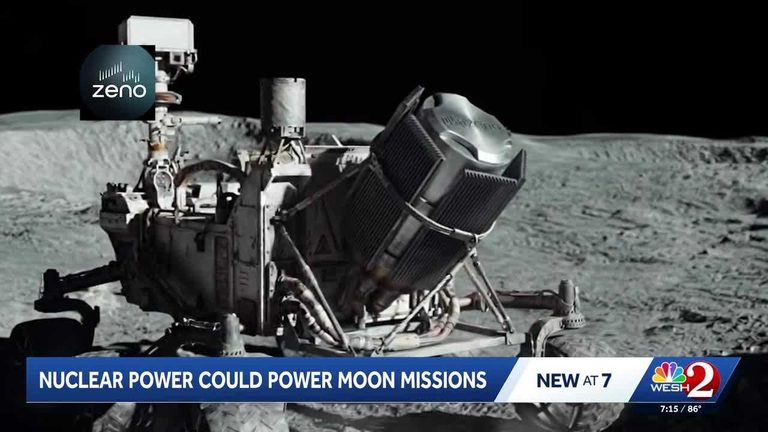
Firefly’s Blue Ghost lander will generate electricity from solar arrays during the daylight portion of the mission, powering NASA‑provided payloads. When the sun sets, Zeno Power’s radioisotope heater unit (RHU) is designed to take over, providing a steady 5‑watt heat source derived from the natural decay of radioactive material. Unlike larger radioisotope thermoelectric generators used on deep‑space probes, the RHU is small enough to fit on a commercial lander while delivering years of reliable heat without sunlight.
Implications for future lunar infrastructure
NASA Administrator Jared Isaacman highlighted the significance of the technology during remarks about the Artemis II mission, describing it as part of a broader push toward a sustainable lunar presence. Isaacman noted that a permanent “Moonbase” will likely depend on a mix of solar and nuclear power to keep habitats, scientific instruments, and life‑support systems running through the long night.
Beyond the immediate mission, the successful demonstration of a compact nuclear heater could enable a new class of lunar assets—communication relays, scientific stations, and even early‑stage habitats—that remain functional without constant sunlight. The technology also aligns with NASA’s plans for the SR‑1 Freedom spacecraft, a proposed nuclear‑powered interplanetary vehicle slated for launch from Kennedy Space Center in late 2028.
Firefly’s track record
Firefly Aerospace has already proven its ability to land on the moon, successfully delivering its first Blue Ghost spacecraft in 2025. The company’s focus on affordable, commercial‑grade launch services has attracted both private investors and government partners, positioning it as a key player in the emerging lunar economy.
By integrating Zeno Power’s RHU, Firefly aims to demonstrate that small‑scale nuclear solutions can complement solar power, reducing the risk of mission failure due to power loss during the two‑week night. If the test proves successful, the approach could be scaled for larger missions, including crewed landers and surface habitats.
Looking ahead
The partnership underscores a growing trend in the aerospace sector: leveraging nuclear energy to overcome the limitations of solar power in deep‑space and lunar environments. As private companies like Firefly and Zeno Power push the boundaries of what is technically feasible, the United States’ leadership in space exploration may increasingly rely on a blend of commercial innovation and federal support.
Stakeholders from the scientific community, commercial space industry, and policy makers will be watching the 2028 launch closely. A successful “Survive‑the‑Night” demonstration could accelerate plans for a permanent human foothold on the moon and set the stage for future missions to Mars and beyond.
Original reporting: WPBF West Palm Beach — read the source article.