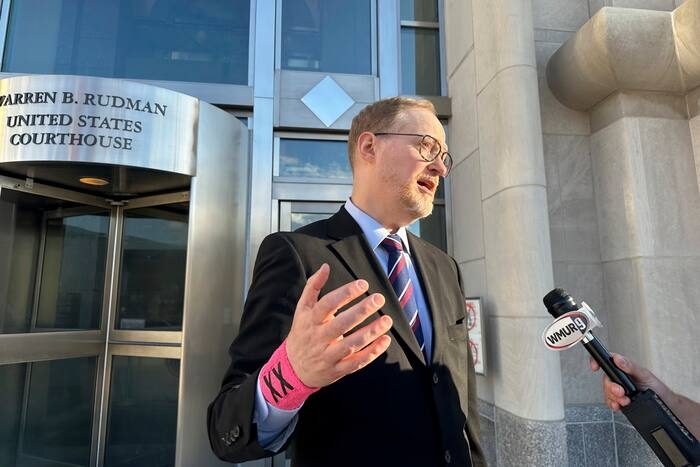
New Hampshire federal Judge Steven McAuliffe issued a decisive order on Thursday allowing two local fathers to wear pink wristbands marked “XX” at high school athletic events. The ruling ends more than two years of litigation that began when the men were barred from displaying the wristbands at a 2024 soccer match that featured a transgender girl on the opposing team.
Background of the case
Kyle Fellers and Anthony Foote sued the Bow School District after district officials prohibited them from wearing the wristbands on school grounds. The district argued it needed to protect students from potential harassment, claiming the wristbands could incite hostility toward the transgender athlete.
Both men testified that their intent was simply to express a viewpoint, not to harass or intimidate. They explained the wristbands, marked “XX,” symbolize female chromosomes and reflect their belief in preserving traditional definitions of sex in sports.
Court decision
In a dismissal order, Judge McAuliffe held that the fathers have a protected First Amendment right to silently wear the wristbands. He noted that school officials had violated that right by imposing the ban. Under a settlement agreement, the district’s risk pool will pay $225,000 to the Institute for Free Speech, which represented the plaintiffs, and $50,000 to the men’s attorney. Each plaintiff will receive a symbolic $17.91, representing the year the First Amendment was ratified.
“It took more than two years, but the court has recognized that what happened to us was wrong,” Fellers said in a statement. He added that he missed half of his daughter’s senior‑year soccer games while fighting for what he believes in.
Legal context
The district had previously obtained a preliminary injunction preventing the men from wearing the wristbands while the case proceeded. A federal appeals court later reversed that injunction, finding that school officials “cannot favor one side of a debate involving parental speech on an issue of prominent public concern.”
Endel Kolde, attorney for the Institute for Free Speech, emphasized the broader significance: “Parents don’t surrender their First Amendment rights when they walk into a high school soccer game.”
Reactions
The school district did not respond to a request for comment. The ruling underscores the ongoing national conversation about parental speech, transgender participation in sports, and the balance between protecting students and preserving constitutional freedoms.
Local families and advocacy groups are watching the case closely, seeing it as a bellwether for future disputes over speech rights in schools across New England and the nation.
Original reporting: KSAT Sports (San Antonio) — read the source article.