The City of Eugene is moving into the second phase of a project to record and preserve the history of the city’s earliest Black residents. Three municipal teams – the Office of Equity & Community Engagement, the Planning Division and the Cultural Services Division – began the effort in June, partnering with Oregon Black Pioneers, the state’s only African American historical society.
Oral‑history outreach
Oregon Black Pioneers has been hired to interview descendants of the region’s first Black pioneers, including members of the Mims, Johnson, Reynolds, Nettles and Rutledge/Gibson families. The city is paying the organization about $7,000 for roughly 24 hours of oral‑history work, a task that has accelerated over the past month.
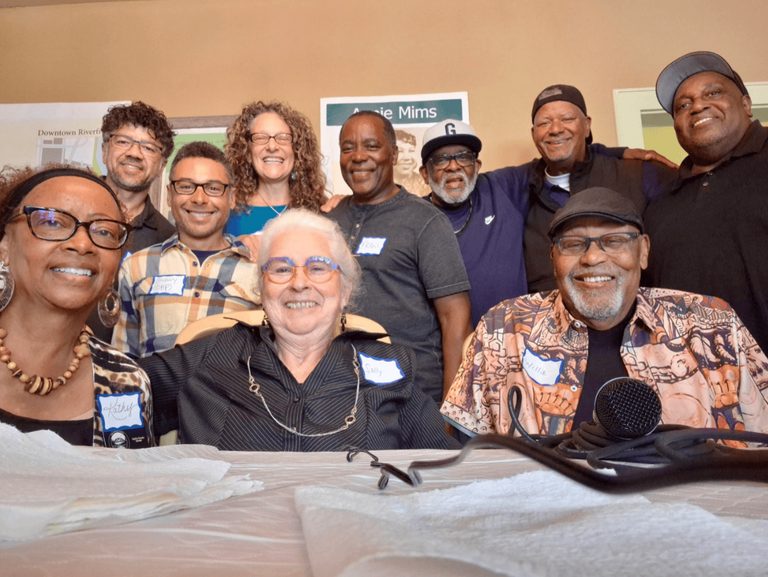
In late September, project leaders Fabio Andrade, city Equity & Community Engagement Manager, and Zachary Stocks, executive director of Oregon Black Pioneers, met with seven descendants at the historic Mims House. Participants shared memories ranging from earning 75 cents an hour at their first jobs to a fistfight that erupted when Black teenagers attended an all‑white dance in the 1940s. “They talked about how they had to fight their way out of that building, and that’s a story they’ve never seen anyone tell before,” Stocks said.
Why the project matters
Andrade explained that the historic context statement will identify places and events that shaped Black history in Eugene. “It can be used for historic preservation, or it can be used in future planning processes to understand how some groups were negatively impacted, and that can influence projects moving forward,” he said.
The first draft of the statement relied on census data, city and county records, newspaper archives and scholarly research. However, those sources did not capture the lived experiences of residents of the former Ferry Street Village – also known as the “Across the Bridge” neighborhood – which was displaced and demolished by Lane County in 1949. “That’s where the storytelling really becomes critical to our understanding of Black life at this time,” Stocks added.
Public participation
The city is inviting the broader public to submit memories, reflections, historical information and artifacts by Dec. 15. Materials gathered will be used to refine the draft, resolve conflicting accounts and locate early Black families who have since moved away.
When the final document is ready, the city plans to present a polished version to the community in February and will seek grant funding to complete the work. “It is not an adopted plan, so it doesn’t come with any recommendation or mandate for what must be done after,” Andrade clarified. “It is just documenting what we can about the history of the places in Eugene that are connected to the experiences of Black people.”
Future memorials
Two public monuments are also in development to honor the Across the Bridge community. The Black Cultural Initiative’s bronze statues at Alton Baker Park are in the final stages of casting, with permitting and an unveiling expected by May 2027. A memorial fountain at Downtown Riverfront Park will be installed in early 2027 after design refinements to more accurately reflect the community’s story.
By capturing oral histories and preserving physical landmarks, Eugene hopes to ensure that the contributions and challenges of its early Black families become an integral part of the city’s heritage and identity.
Original reporting: Homepage – Lookout Eugene-Springfield — read the source article.