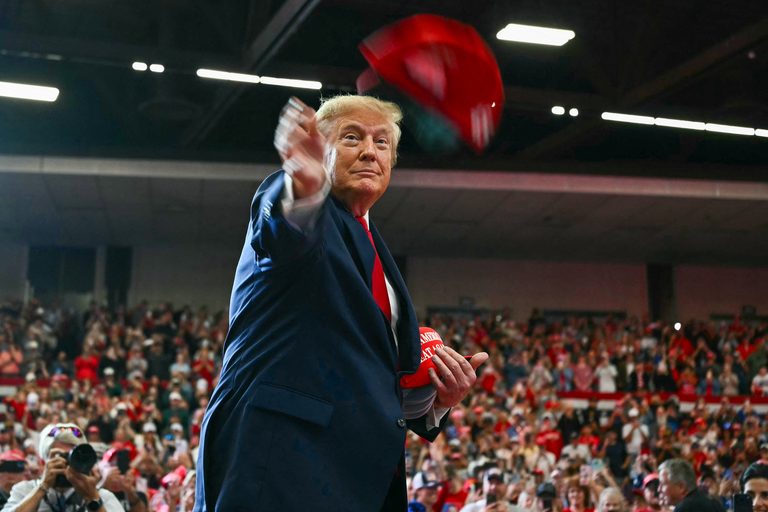
President Trump is crisscrossing the nation with a series of rallies that draw enthusiastic crowds in solidly red states and select battleground districts. The tour, described by White House spokesperson Davis Ingle as a “clear choice” for voters, underscores the administration’s belief that Trump remains the “unequivocal leader” and top motivator for the Republican Party.
Administration’s policy highlights
While the rally schedule dominates headlines, the White House points to concrete achievements: steps to lower prescription‑drug prices, incentives to boost domestic manufacturing, increased enforcement at the U.S.–Mexico border and opposition to federally mandated gender‑affirming treatments for minors. These initiatives are presented as the “commonsense agenda” that contrasts with what the administration calls the Democrats’ “extreme liberal policies”.
Campaign spending and outreach
Political groups aligned with the president have poured roughly $277 million into Republican efforts since September 1, supplementing the $416 million cash reserve of the MAGA Inc. Super PAC. The administration also used taxpayer‑funded television ads to promote Trump’s message, echoing a 2024 campaign spot.
Poll snapshots and criticism
An AP‑NORC poll conducted in late September found that only 17 % of U.S. adults approve of Trump’s handling of the cost of living, a figure that reflects ongoing concerns about high energy prices amid the war with Iran. A separate CNN/SSRS poll in mid‑October showed that about four‑in‑ten registered voters say their congressional vote would be a message opposing Trump, while roughly two‑in‑ten would vote to support him.
Critics such as Jessica Mackler, president of EMILY’s List, argue that the president’s self‑focused approach alienates voters who feel the agenda makes their lives harder. Michigan pollster Richard Czuba echoed this view, stating that Trump’s emphasis on himself is driving some voters toward the Democratic side.
Local impact and voter sentiment
Despite mixed poll numbers, the rally tour continues to produce tangible endorsements. In Iowa, retiree Cindy Downes said she voted for Republican Senate and House candidates because “POTUS supports them” and she trusts his judgment. Conversely, in Wisconsin, voter LuAnn Bird cited opposition to Trump as a key reason for supporting Democratic candidates.
The administration maintains that the rallies are a strategic effort to energize the base while still reaching swing‑state voters, noting that Trump’s appearances are often concentrated in reliably Republican areas but also include stops in competitive districts.
Looking ahead
As the midterm elections approach, the Trump administration will likely continue to leverage the president’s personal brand alongside its policy agenda, hoping to translate rally enthusiasm into congressional seats. The coming weeks will reveal whether the strategy can overcome the polling challenges highlighted by recent surveys.
Original reporting: NBC10 Boston — read the source article.