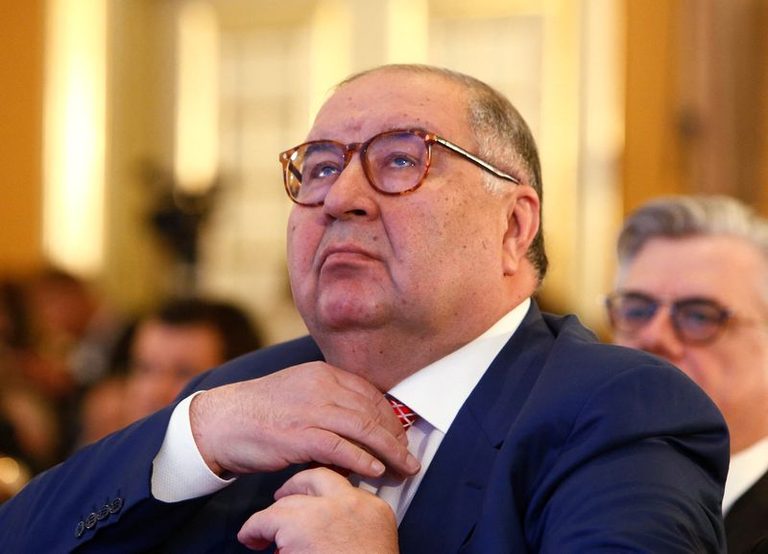
Brussels – In a coordinated move on Monday, ambassadors from the European Union’s 27 member states agreed to lift the sanctions that were imposed in 2022 on Russian‑linked businessmen Alisher Usmanov and Mikhail Fridman. The decision will take effect unless any EU government files an objection within the next few hours, diplomats said.
Package deal includes longer‑term sanctions on other Russian targets
The delisting of the two oligarchs is part of a broader package that renews sanctions on thousands of Russian individuals and entities for a three‑year period. This renewal is significantly longer than the typical six‑ or twelve‑month rollover periods that have been used in the past.
Member‑state positions vary
France, citing pressure from Azerbaijan, joined Slovakia in urging the removal of Usmanov from the sanctions list. Luxembourg, meanwhile, pressed for Fridman’s delisting, arguing that maintaining sanctions on him alone could weaken the case for keeping Usmanov sanctioned.
French officials have not publicly confirmed the exact nature of their lobbying, but diplomatic sources say the French government believes the move aligns with broader strategic interests, including recent tensions involving French nationals detained in Azerbaijan.
Background on the sanctioned individuals
Alisher Usmanov, a Russian‑Uzbeks billionaire, was described by the EU in 2022 as having “particularly close ties” to President Vladimir Putin. Mikhail Fridman, a Russian entrepreneur, is currently seeking $16 billion in compensation from Luxembourg through arbitration, a dispute that has added complexity to the sanctions discussion.
Both men were originally sanctioned for their perceived support of Russia’s war in Ukraine, which included travel bans to the EU and the freezing of assets held within the bloc.
Implications for EU policy
The decision reflects a nuanced approach by the EU: while it is willing to ease restrictions on specific high‑profile individuals, it simultaneously reinforces a tougher stance on the broader Russian network involved in the conflict. By extending sanctions on a large group of Russian actors for three years, the EU signals its continued commitment to pressuring Moscow while allowing flexibility for diplomatic negotiations.
Analysts note that the rapid timeline for objections underscores the EU’s desire to present a united front, even as member states pursue divergent national interests. The move also highlights the ongoing influence of external actors, such as Azerbaijan, on European foreign‑policy calculations.
What comes next?
Should no member state raise an objection, the sanctions on Usmanov and Fridman will be lifted within hours. The three‑year renewal of sanctions on the wider Russian list will take effect shortly thereafter, affecting a broad swath of individuals and entities linked to the war effort.
Observers will be watching how the EU balances these dual tracks—targeted relief for select oligarchs and sustained pressure on the larger Russian network—as the conflict in Ukraine continues to shape European diplomatic and security strategies.
Original reporting: Appleton, WI News Feed (HLL/CB) — read the source article.