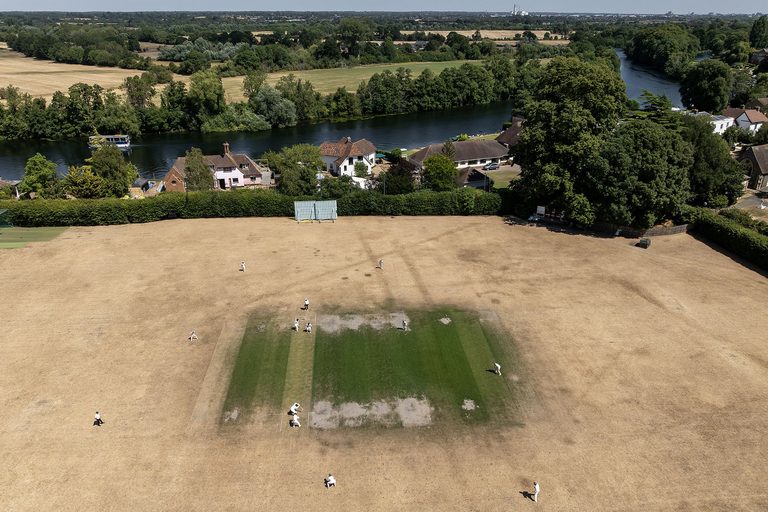
England, known for its rainy weather, is experiencing an exceptionally serious drought that has affected half of the nation. The drought has been caused by successive heat waves and low rainfall, with some areas receiving only 1% of the average rainfall for this time of year.
Impact on the Environment and Economy
The drought has had a significant impact on the environment, with rivers running alarmingly low and an increase in algae growth in waterways. The drought has also put huge pressure on water supplies, with millions of people under hosepipe bans. Farmers and experts are warning of a detrimental impact on food production, with repeated disruption to vegetable production potentially making healthy food less affordable for households.
The drought is also having a significant impact on the economy, with the country experiencing its fourth heat wave of the year. The heat wave has led to an increase in wildfire risk, with a major incident declared on the Suffolk coast after a large wildfire broke out.
Climate Change and Extreme Weather
Scientists say that the swing between wet and dry extremes, often referred to as weather whiplash, is becoming more frequent and intense due to climate change. The country has experienced three droughts in the past five years, with 2026 joining 2022 and 2025. The Met Office has confirmed a new England June daily temperature record of 38 degrees Celsius, higher than the previous record.
Experts are calling for long-term planning for water resourcing in the UK, including investment in water infrastructure to maintain as much water as possible. The government is being urged to take action to protect people, communities, and the environment from disaster.
Original reporting: El Paso News (HLL/CB) — read the source article.