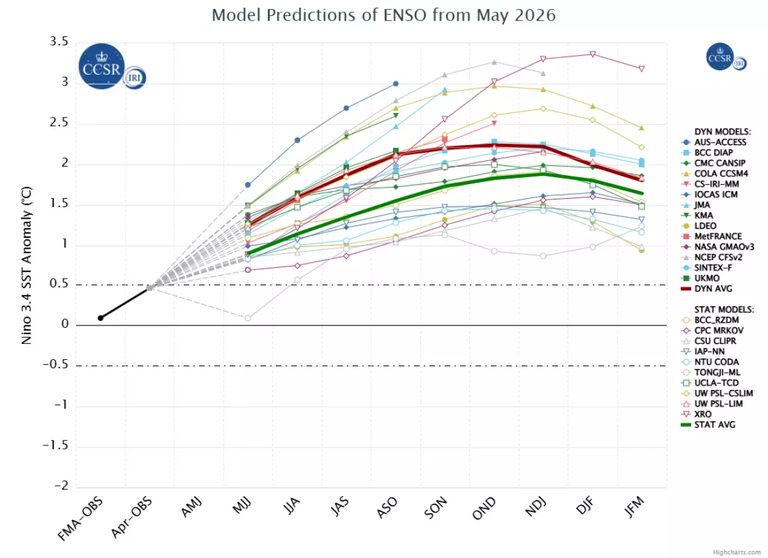
Sea surface temperatures across portions of the equatorial Pacific have warmed enough for forecasters at the National Oceanic and Atmospheric Administration to declare that an El Niño event is underway. This climate pattern is expected to influence weather conditions across North America, including Florida.
Local Impact
For Florida, some of the earliest effects may begin to become noticeable later this summer. When an El Niño develops during the warm season, drier-than-normal conditions are often favored from August into October. One contributing factor to the reduced precipitation is decreased tropical activity across the Atlantic basin.
El Niño tends to increase vertical wind shear, which disrupts developing tropical cyclones and limits opportunities for strengthening. Hurricane forecasters at Colorado State University and NOAA have already taken the status of ENSO into account for their annual Atlantic basin tropical season outlooks. Experts at CSU are expecting a quieter-than-normal Atlantic hurricane season, with 11 named storms, five hurricanes and two major hurricanes.
Winter Outlook
Across the Southeast, El Niño historically favors a stronger and more active subtropical jet stream during the winter. This pattern often results in increased cloud cover, cooler temperatures and more frequent precipitation. From December through March, precipitation totals across parts of the region can average 30% to 50% above normal during an active El Niño event.
Original reporting: Jacksonville Today — read the source article.