Recent rain has eased drought conditions across much of North Carolina, but experts say the effects of months of dry weather don’t disappear overnight. As lakes and groundwater levels drop, water temperatures can rise, algae can flourish, and in some cases, contaminants can become more concentrated because there’s less water to dilute them.
Private Well Owners at Risk
Laura McKelvey, a Chatham County homeowner, has relied on a private well for more than 30 years. During this summer’s drought, she noticed the water pressure dropping — something she hadn’t experienced during previous dry spells. McKelvey, a retired Environmental Protection Agency employee, said the drought also underscored another concern: rapid development across the region.
Ian Land, co-owner of Triangle-based Aqua Solve NC, said drought can lower groundwater levels, stir up sediment, and change water quality, particularly in lower-yield wells. His company has received calls from homeowners whose wells suddenly became discolored or even ran dry after years without problems.
Public Water Systems Adjust Treatment
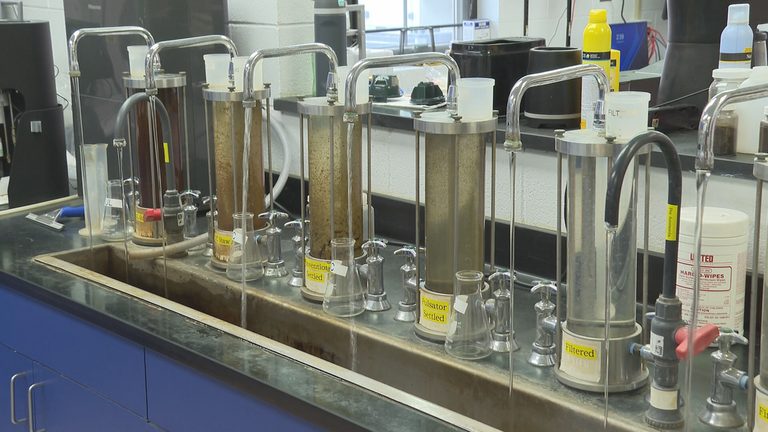
Public water utilities across central North Carolina told WRAL they continuously monitor changing water quality and adjust treatment as conditions evolve. At Raleigh Water, Water Jesus Edward Buchan said the drought actually improved one aspect of Falls Lake’s water quality.
Utilities adjust treatment by changing chemical doses and continuously testing water quality before it enters the distribution system. The drought has also prompted regional cooperation, with OWASA supplying water to Durham, whose reservoir levels fell more sharply earlier this summer.
Original reporting: WRAL Raleigh — read the source article.