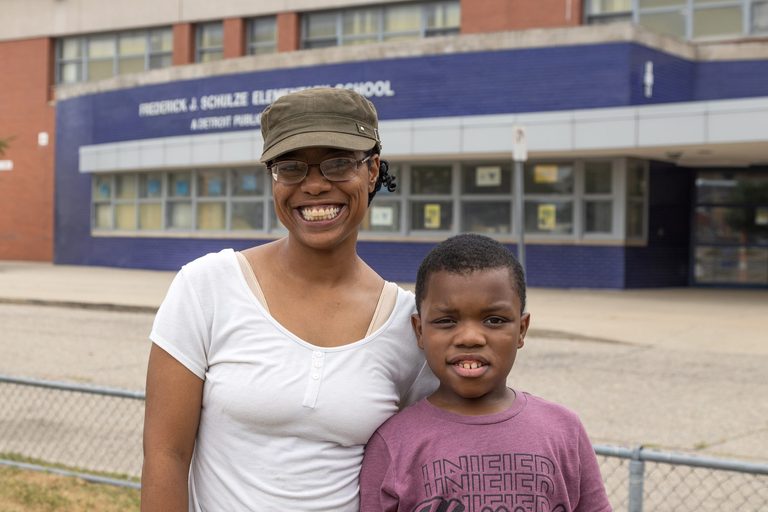
For three years, Detroit resident Rachel Adams drove 50 minutes each day from her northwest Detroit home to Munger Elementary‑Middle School on the city’s southwest side so her son, Eric Rodgers, could receive autism services. When the district’s new Exceptional Student Education (ESE) hubs took effect for the 2025‑26 school year, Eric was transferred without explanation to Schulze Academy for Technology and Arts near the Bagley neighborhood.
District’s intent behind the ESE hubs
The Detroit Public Schools Community District (DPSCD) restructured its special education department, branding the change as an “Exceptional Student Education” model. The plan added self‑contained classrooms for students with disabilities inside general‑education buildings, aiming to keep services on each student’s high‑school feeder pattern and cut family travel time.
DPSCD Superintendent Nikolai Vitti told BridgeDetroit that a survey of families at ESE sites showed more than 85 % satisfaction after the first year, and over 70 % said the experience was better than the prior year. The district collected 166 responses in March and 44 in May.
Parents voice concerns
Despite the district’s optimism, many parents describe a rocky rollout. Adams said progress reports from Eric’s teachers were infrequent and the new autism program felt disorganized. Though Schulze is only seven minutes from her home, she would prefer her son return to a school in Southwest Detroit, emphasizing that “care is more important than convenience.”
During a virtual meeting held on Microsoft Teams, parents asked about enrollment procedures, tracking of Individualized Education Program (IEP) services, and communication about school activities. DPSCD staff responded in the chat and later addressed several questions aloud.
Staffing shortages persist
District officials acknowledge ongoing staffing challenges. Enrollment in the ESE program grew from 7,132 students in fiscal year 2024 to 7,990 in fiscal year 2026, with a projected 8,068 for 2027. To meet rising demand for autism and Mild Cognitive Impairment services, DPSCD plans to add eight new self‑contained classrooms, including an ESE hub at Burton International Academy.
However, the union representing paraprofessionals, custodians, bus attendants and food‑service workers reported overcrowded classrooms and staff turnover. AFSCME Local 345 president Michelle Lee said many paraprofessionals quit because of a lack of structure. Vitti confirmed that 65 ESE paraprofessionals resigned during the 2025‑26 school year, matching the number who left the previous year. The district currently employs 550 ESE paraprofessionals and has 12 vacancies.
Vitti said the district is hiring roughly 40 additional ESE teachers and 15 paraprofessionals, and is nearly fully staffed for ancillary roles such as social workers, psychologists, speech‑language pathologists, occupational therapists and physical therapists.
Funding constraints
Vitti noted that both federal and state governments underfund special education, a challenge shared by districts nationwide. While acknowledging budget limits, he stressed that funding shortfalls are not an excuse for poor service, adding, “We always try to meet those needs.”
Next steps
The district plans an in‑person meeting in the coming weeks to discuss further improvements to the ESE department, though a specific date has not yet been set. Parents and community members hope the dialogue will lead to clearer communication, more consistent IEP implementation, and reduced classroom chaos.
Original reporting: BridgeDetroit — read the source article.