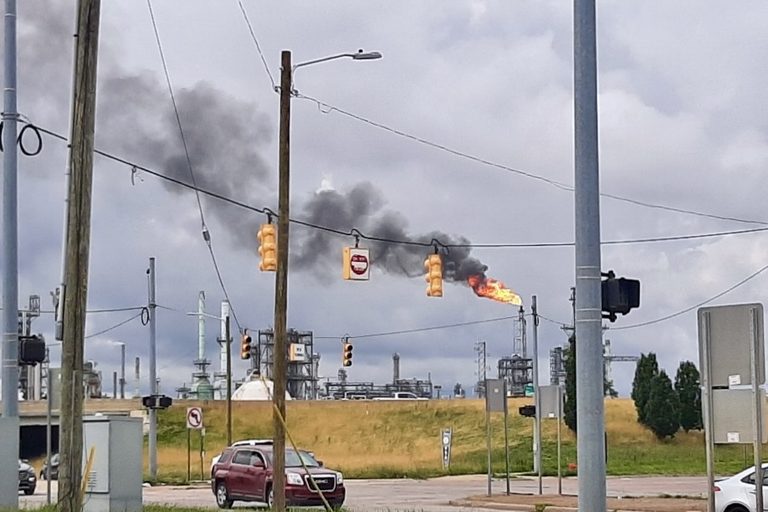
Michigan regulators approved air quality permits on July 30 for Marathon Petroleum and MPLX Terminals in Southwest Detroit, less than a month after a flaring event at the oil refinery. The proposals to expand a rail system and increase fuel loading were approved with added conditions from the Michigan Department of Environment, Great Lakes, and Energy (EGLE).
Project Details
State regulators estimate the projects will increase emissions of ozone-forming pollutants and sulfur dioxide. Marathon is a refinery located across I-75 from the Kemeny Recreation Center that produces gasoline, fuel oils, asphalt, propane, and other products, according to an EGLE technical fact sheet.
EGLE is requiring Marathon to extend its enhanced air monitoring program for at least six years after the issuance of the permit, and at no less than four locations. The monitors track carbon monoxide, coarse particulate matter, sulfur dioxide, volatile organic compounds, and total reduced sulfur.
A power outage prompted the refinery to burn off excess gas as a safety measure, Detroit Mayor Mary Sheffield said in a July 6 statement. The incident resulted in health symptoms severe enough that nearby residents considered visiting urgent care, according to the Ecology Center, an environmental nonprofit.
Regulatory Response
Regulators held a hybrid hearing attended by over 60 people, and a formal comment period. The new state permit adds missing language from an existing Environmental Protection Agency consent decree with Marathon, according to EGLE.
The provision deals with an “external utility loss” — a power interruption like the one that resulted in gas flares at the refinery earlier this month. The EPA’s 2016 consent decree with Marathon stipulated the installation of flare gas recovery systems at refineries in five states. The systems recycle gases that would otherwise be combusted.
Original reporting: BridgeDetroit — read the source article.