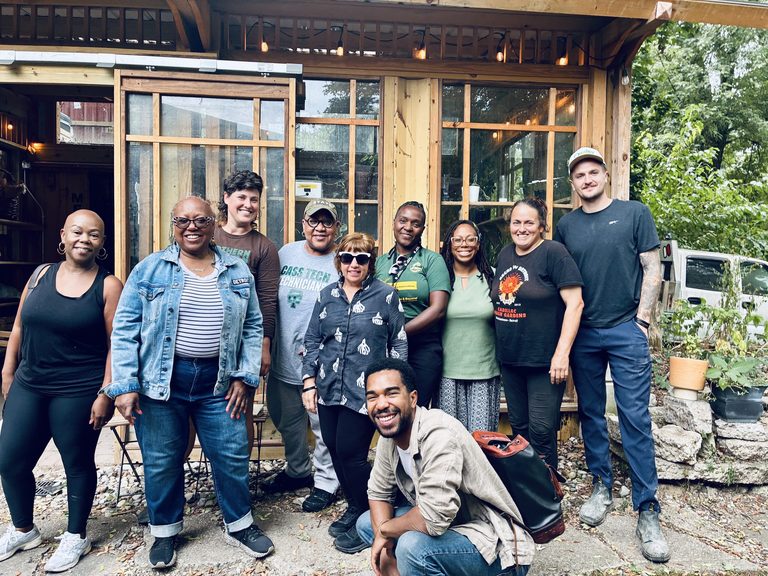
A coalition of Detroit urban farmers is turning a 9,000‑square‑foot former grocery store on Oakland Avenue into a solar‑powered community food hub. The project, spearheaded by the nonprofit Detroit Food LOOP, will house a commercial kitchen, food‑storage facilities, a community‑event space and an agriculture‑business training center. A one‑bedroom “care unit” will also provide emergency housing for residents in crisis.
Local leadership drives food sovereignty
Jerry Ann Hebron, executive director of Northend Christian Community Development Corporation and Oakland Avenue Urban Farm, said the hub fills a critical gap in food sovereignty – the power to control one’s own food supply, not merely access to it. “Food sovereignty is not so much about access; it’s more about the power, and that’s the gap that this project fills,” Hebron explained.
Hebron noted that federal support for urban farming has waned since the new administration took office, with cuts to USDA grants and other programs. “When the new administration came in, those federal funds got cut, grants and everything. But the fact that we did not get the funding did not stop the need for us to have this community resilience food hub within our community,” she said.
Funding and future expansion
The coalition purchased the building on August 14 for $325,000, using a $350,000 grant from the Michigan Department of Environment, Great Lakes, and Energy and a loan from a community development financial institution. They are now seeking an additional $8‑$10 million to complete the North End hub and to fund similar hubs across the city, including Cadillac Urban Gardens, a one‑acre rooftop garden in Southwest Detroit that provides free produce to residents.
Detroit Food LOOP is also courting corporate sponsors, offering naming rights for the North End center. “Engage – the more folks are intentional about buying from local farmers and the Detroit People’s Food Co‑op, the more we advance the work of the Food LOOP,” said Jon Kent, co‑founder of Sanctuary Farms, which plans its own resiliency center on Detroit’s east side.
Next steps and community involvement
The project’s design was developed with the Detroit Collaborative Design Center at the University of Detroit Mercy. The plan will be presented to the Detroit City Council in late September for approval. In the meantime, Oakland Avenue Urban Farm will host an emergency‑preparedness workshop on September 12, inviting residents to learn how to protect their families during crises.
City officials have expressed support. “I’ve watched OAUF grow over time and am so proud to see it today as a true community asset,” said Tepfirah Rushdan, director of the City of Detroit Office of Sustainability, in a press release.
The new hub promises to strengthen Detroit’s food system, create jobs, and give families greater control over the nourishment they bring to their tables – a tangible expression of faith‑based, family‑centered stewardship of the city’s resources.
Original reporting: BridgeDetroit — read the source article.