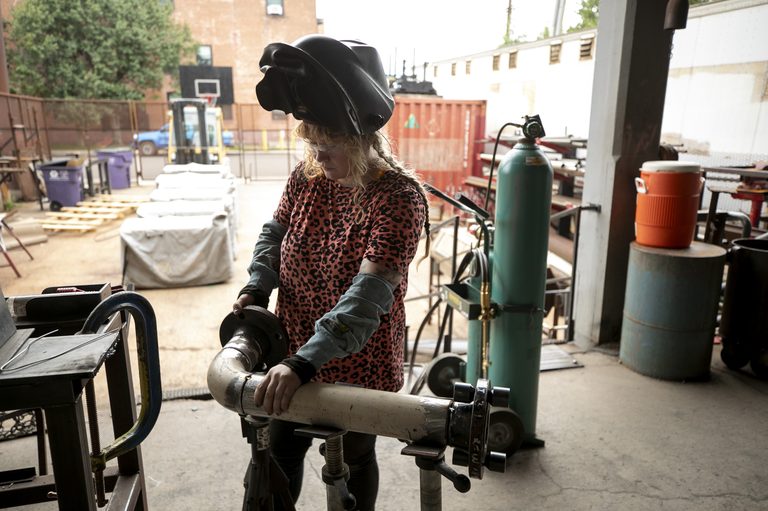
Emily Griffith Technical College, a Denver Public Schools institution, is marking its 110th anniversary by highlighting stories like that of Hayli Klatt, a 32‑year‑old Denver resident who recently enrolled in the college’s welding program.
Finding a safe space in the trades
Klatt chose welding after experiencing misogyny in a previous construction job. She said the presence of a contract welder who worked part‑time and was left alone by his coworkers sparked both jealousy and hope. “I was like, ‘If I did that, everyone would leave me alone,’” she explained.
At the Trades Campus in La Alma Lincoln Park, Klatt discovered a supportive environment, including a female welding instructor, that has helped her feel safe and confident in a traditionally male‑dominated field. “It’s kind of magical. I did not feel safe before and now I do,” she said.
College leadership backs expanded degree options
Sarah Heath, recently hired by Denver Public Schools to oversee new Associate of Applied Science degrees, emphasized that certificates and apprenticeships may not be enough for students with managerial ambitions. “In skilled trades, a degree can open pathways to project‑manager roles and higher earnings,” Heath said.
Emily Griffith’s two Denver campuses already offer a wide range of programs, from auto collision repair and barbering to HVAC, culinary arts, and English language acquisition, reflecting the founder’s credo “for all who wish to learn.”
Continuing a legacy of inclusive education
Emily Griffith founded the school in 1916 with a mission to provide a welcoming face, a warm meal, and education as a pathway to a better life for every student. Heath believes the college remains true to that vision a century later.
While Klatt does not plan to pursue an associate’s degree, she hopes her welding training will lead to a well‑paid position on an oil rig. The only obstacle she mentions is balancing work with caring for her dog.
Community impact
The story underscores how local technical education can empower individuals, especially women, to break into high‑pay trades, supporting both family stability and the broader Denver economy.
Original reporting: Denverite — read the source article.