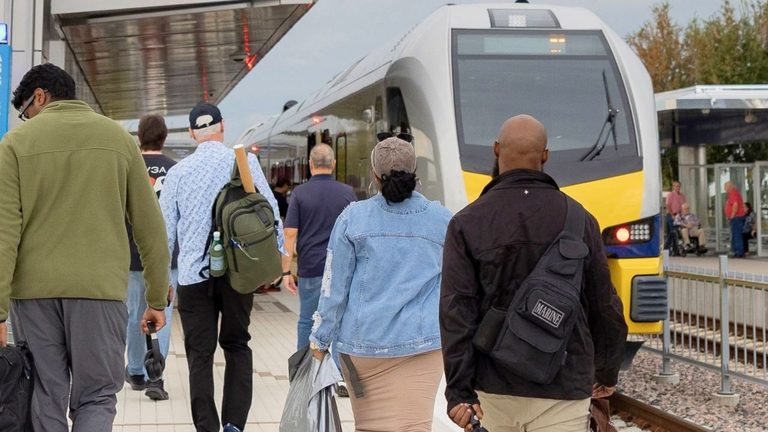
During a special Board Committee on Safety and Security meeting on October 27, Dallas Area Rapid Transit (DART) released a preliminary budget outlining a $288.3 million investment to install fare‑gate systems at 66 light‑rail stations and to expand transit‑security staffing. The proposal, presented as a briefing rather than a final vote, leaves key questions unanswered about long‑term operating costs and continuous onboard protection.
Cost Breakdown and Timeline
The estimate totals $288,325,000 and includes roughly $161.5 million for station construction, $43.7 million for gates and software, $53.3 million for design and soft costs, $21.45 million for other project items, and $8.4 million in reserves. The plan calls for a four‑to‑six‑gate demonstration in December 2028, with a broader rollout slated from January 2028 through December 2031. However, the slide showing a final design award in December 2028 conflicts with the rollout dates, indicating the schedule still needs clarification.
Security Staffing Projections
DART’s model proposes adding 25 transit‑security officers in fiscal year 2027 and another 25 in fiscal year 2028, ultimately reaching 150 officers. The model envisions at least one security presence on each light‑rail vehicle, the Silver Line, and the Trinity Railway Express, operating two 10‑hour shifts per day. Each weekday shift would consist of 35 police officers, 23 fare‑enforcement officers and 26 transit‑security officers, with additional relief coverage.
The projected annual cost for the extra staffing is $9.5 million using regular pay, rising to $14.2 million if overtime is required. The proposal does not include a recurring budget for operating, maintaining or staffing the gated system, nor does it allocate a dedicated funding package for the full deployment.
Current Police and Security Structure
DART’s police department, staffed by Texas‑licensed peace officers, operates around the clock but does not guarantee continuous personnel aboard each vehicle. Contracted transit‑security officers, provided by Inter‑Con Security Systems Inc., are armed but are not classified as peace officers. Fare‑enforcement officers, who check proof of payment and can issue citations, are not permitted to carry weapons under Texas Transportation Code §452.0612.
Counting all three groups as police would misrepresent their authority. Moreover, Level IV training—required for personal‑protection officers in Texas—has not been documented for the proposed security staff, meaning the plan does not yet assure Level IV security on every bus and train throughout operating hours.
Budget Context
The board approved its FY 2027 budget on September 22, which includes an $8 million increase for operating‑funding and moves the transit‑security contract into the operating budget. The budget lists 219 police officers, 74 fare‑enforcement officers, 100 transit‑security officers and 155 armed security guards, but these figures represent budgeted positions, not necessarily filled roles or staff present on vehicles at any given time.
Pilot Demonstration
DART’s Operation Access program will conduct a 90‑day demonstration at five stations beginning in late fall, testing controlled access, enforcement and staffing needs. The pilot aims to provide data that could shape the final design and funding decisions.
Agency Statement
“Every customer should be able to ride DART safely, comfortably and with confidence,” said David Leininger, DART’s interim president and CEO, in the September 9 announcement of the pilot.
While the fare‑gate and security proposal signals a commitment to improving rider safety, DART officials and local stakeholders will need to address the missing details on ongoing operating costs, staffing coverage for all vehicle trips, and the certification standards for security personnel before the plan can move forward.
Original reporting: The Dallas Express — read the source article.