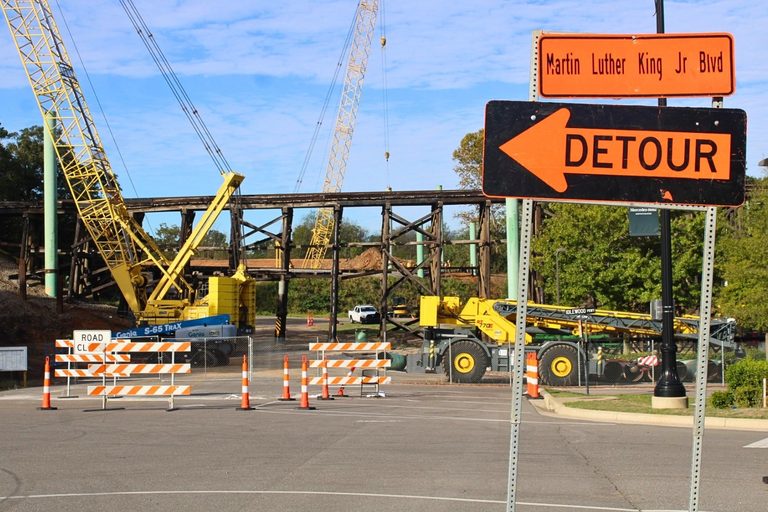
City Engineer Mike Gardiner announced Tuesday that crews have begun pile‑driving for temporary railroad bridge spans near the Mercedes‑Benz Amphitheatre, marking the start of Phase 3 of Tuscaloosa’s multi‑year road‑improvement program.
Phase 3: Expanding the Historic Trestles
The $51 million phase will rebuild the two rail crossings that run beneath the historic wooden trestles on Martin Luther King Jr. Boulevard and Jack Warner Parkway. At the larger “Warrior Main” crossing, the current narrow gap between timber supports will be replaced by a single, wider span. The new structure will carry two lanes in each direction, a shared‑use path on one side and a sidewalk on the other, creating a safer, more attractive corridor for motorists, cyclists and pedestrians.
To the west, the road currently squeezes through a narrow opening beneath the “Goodrich” spur line. The city’s plans will dramatically widen this segment, adding two traffic lanes each way, a center turn lane, a shared‑use path and a sidewalk. Gardiner said the improvements will “make it such a better atmosphere and easier access” for residents and visitors alike.
Economic and Community Benefits
When the widened roads are complete, the city expects to open a gateway to roughly 100 acres of under‑utilized land, providing space for future commercial and residential growth. Phase 3 will also link the Western Riverwalk to the main Riverwalk near the amphitheatre, moving Tuscaloosa closer to its vision of a unified, more‑than‑9‑mile walking trail that connects downtown to the riverfront.
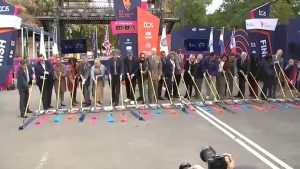
Mayor Walt Maddox, who broke ground on the project in July, reflected on his first day in office in 2005, noting that the current work fulfills a long‑standing promise to address decades of neglect in West Tuscaloosa. “Today, we break ground on a project that is going to be very special to this community, not just in the short term, but in the decades to come,” he said.
Local Funding and Management
The entire three‑phase project totals just over $86 million and is funded by the Tuscaloosa County Road Improvement Commission (TCRIC), a body created through House Bill 600 to finance major road projects with local sales‑tax revenue. By managing the work directly, the city says it is saving at least 10 percent of projected costs compared with a state‑run approach.
Scott Bridge Company serves as the Phase 3 contractor, the same firm recently awarded a $167 million contract by the Alabama Department of Transportation to replace and expand the nearby Woolsey Finnell Bridge.
Timeline and Public Information
Work began in June and is slated for completion in the summer of 2029. Residents can find updates on lane closures and detours at tuscaloosaroads.com/mlkjwp or by calling Tuscaloosa 311.
The project underscores Tuscaloosa’s commitment to locally‑controlled infrastructure improvements that enhance safety, support economic development and preserve the city’s historic character.
Original reporting: The Tuscaloosa Thread — read the source article.