Connecticut’s neighbors, including New York and New Jersey, have raised their top marginal tax rates in recent years, leaving Connecticut’s tax strategy under scrutiny. The state’s current tax system has been criticized for disproportionately burdening the poor and middle class.
Tax Reform Debate
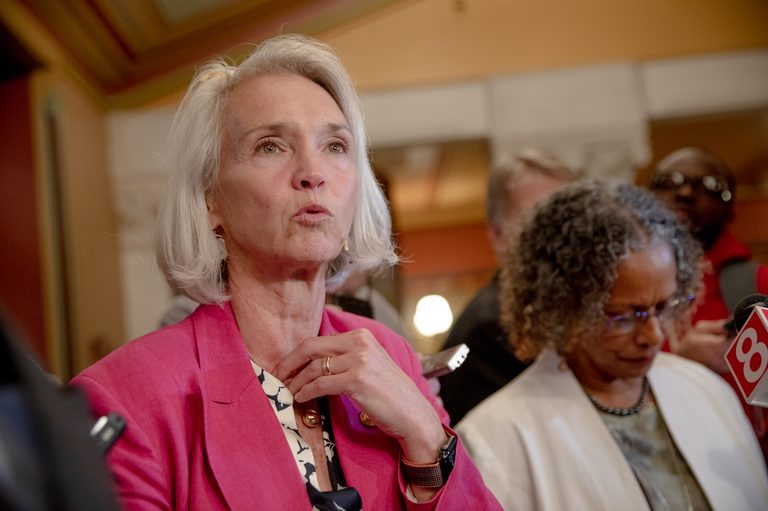
Rep. Maria Horn, a Democrat and co-chair of the General Assembly’s Finance, Revenue and Bonding Committee, believes it’s time for Connecticut to reexamine its tax system. ‘I think it’s time for us to take a hard look at the context in which we live,’ she said. Horn noted that neighboring states have implemented tax reforms, including Massachusetts, which has a surcharge on top earners to invest in education and transportation.
Connecticut’s tax system has seven graduated rates, with the wealthiest households paying 6.99% on all earnings. In comparison, New York state has graduated rates ranging from 4% to 10.9%, while New Jersey’s rates start at 1.4% and max out at 10.75%. Massachusetts taxes most income at 5%, but the rate on income greater than $1.1 million is 9%.
Some lawmakers, including Rep. Josh Elliott, are advocating for tax reform to help middle-class families. Elliott, who is challenging Gov. Ned Lamont for the Democratic gubernatorial nomination, believes that Connecticut’s tax system has pushed too many families to their financial breaking point.
However, Gov. Lamont remains opposed to increasing taxes on top earners, citing concerns that it would prompt them to leave the state. ‘Governor Lamont is committed to more taxpayers, not more taxes,’ his administration has said.
Original reporting: The Connecticut Mirror — read the source article.