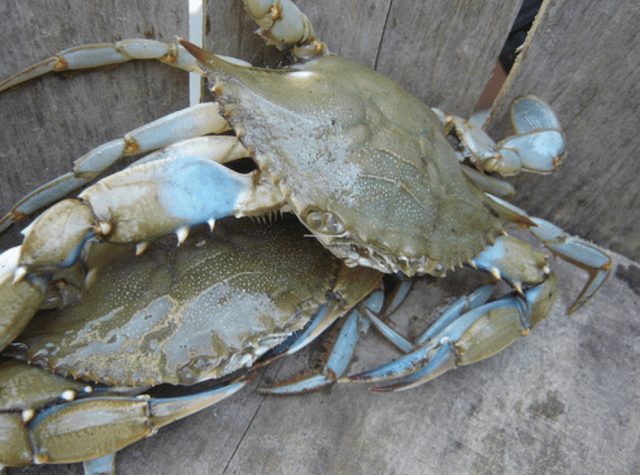
A newly released assessment of the Chesapeake Bay blue crab population found the species has experienced significant long-term declines over the past two decades, raising concerns among fisheries managers and conservation groups about the health of the Bay’s signature species.
Causes of Decline
The Chesapeake Bay Program released its long-awaited blue crab stock assessment in June, analyzing more than 20 years of population data to provide a comprehensive look at trends affecting blue crabs throughout the estuary. The report found that the Bay’s blue crab population in 2023 was about 50% lower than it was in 2011. Declines were observed across female, male and juvenile crab populations, pointing to an overall downward trend despite annual fluctuations.
Researchers examined several possible factors contributing to the decline, including predation by invasive blue catfish, low-oxygen “dead zones” and habitat loss. The assessment did not identify a single primary cause but concluded the species is facing multiple environmental pressures.
Conservation Efforts
Maryland and Virginia conduct annual winter dredge surveys to estimate blue crab abundance. Because blue crabs typically live only a few years, population estimates often vary significantly from one year to the next. The 2026 winter dredge survey, released earlier this year, showed a modest increase in blue crab numbers after the population saw a record low in 2025.
The assessment recommends continuing efforts to improve water quality by reducing pollution from wastewater, stormwater and agricultural runoff, restoring critical habitat such as underwater grasses, marshes and oyster reefs, and addressing the expanding population of invasive blue catfish.
The Chesapeake Bay Foundation said the report underscores the need for continued investment in restoring the Bay’s ecosystem. “Blue crabs need our help,” said Chris Moore, the foundation’s Virginia executive director, in a statement. “To support a strong blue crab population, we must first support a healthy Bay.”
Original reporting: Baltimore Fishbowl — read the source article.