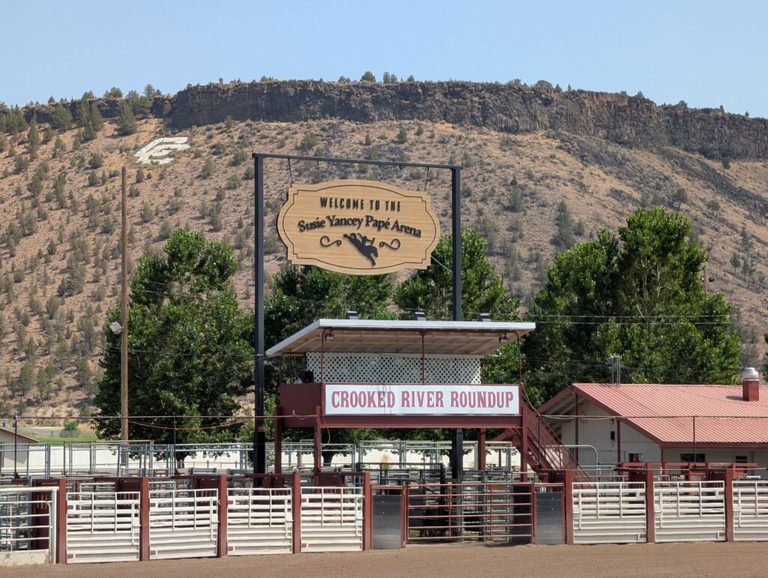
In Crook County, Oregon, recently released Fair Board records reveal that a three‑member Funding Committee met behind closed doors to discuss the use of a $1 million state appropriation for horse‑racing facilities at the county fairgrounds. The meetings, which began on May 7, were held without public notices, agendas, minutes or recordings, raising questions under Oregon’s Public Meetings Law.
Committee composition and meetings
Fair Board minutes from April list members Casey Kaiser, Gail Merritt and Larry Blanton as part of the “Fair board committee.” The committee’s first meeting was reported on May 7, and a subsequent update was presented at the May 18 board meeting by Fairgrounds Manager Casey Daly. Daly said the committee had met the previous week and that there was “a difference in how the money would like to be spent.” He also noted a pending conference call with the Oregon Racing Commission.
At the June 15 board meeting, staff member Parker Gales reported on the committee’s progress in Daly’s absence. County Commissioner Susan Hermreck and county administration were mentioned as still conferring on the next steps for the grant. Board members Larry Blanton and Casey Kaiser discussed whether the grant was limited to projects that directly improve horse safety or could be applied more broadly.
State funding background
The $1 million allocation comes from House Bill 5204, part of the 2026 state budget that set aside $5 million for five counties—Crook, Harney, Josephine, Tillamook and Union—to support horse‑racing events, track maintenance and infrastructure that protects the safety and well‑being of racehorses.
Legal challenge
Reporter Justin Alderman filed a lawsuit in Crook County Circuit Court alleging that the Funding Committee’s private meetings violated Oregon’s Public Meetings Law. County counsel argues the committee is merely advisory, created by Manager Daly to make recommendations to him, not to the Fair Board. However, the board’s own minutes repeatedly list the committee’s updates as official board business, suggesting the committee’s work directly informs board decisions.
County counsel Eric Blaine has previously warned that an advisory committee can still fall under the Public Meetings Law if its recommendations are intended to influence a governing body’s actions. The lawsuit seeks to force the county to hold future meetings openly and to produce records of the committee’s deliberations.
Transparency concerns
The Oregon Racing Commission, which was to be consulted, has faced its own scrutiny after briefly stopping public disclosure of wagering figures—a decision quickly reversed after media pressure. The commission’s involvement adds another layer of public‑interest oversight to the grant process.
As the case proceeds, Crook County officials have not indicated whether the Funding Committee kept formal minutes or recordings of its private sessions. The outcome may clarify how county advisory groups must operate under Oregon’s open‑government statutes.
Original reporting: KTVZ (Central Oregon) — read the source article.