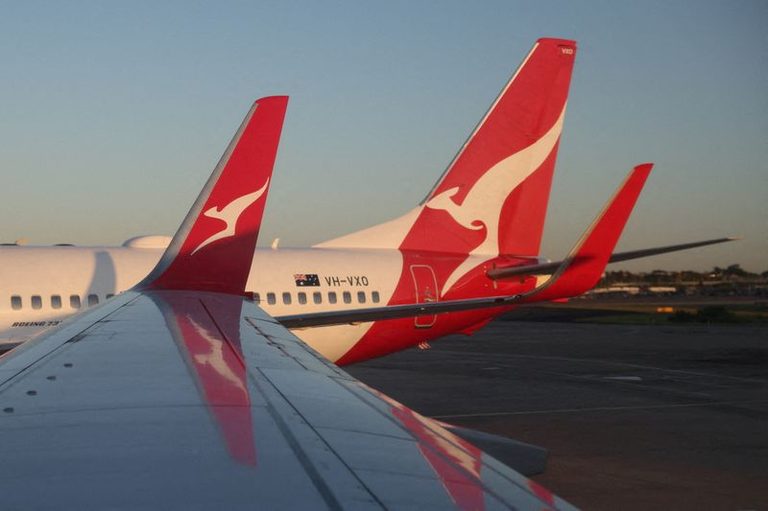
The Australian Transport Safety Bureau (ATSB) announced on Friday that it is investigating a fourth air‑traffic control incident at Sydney Airport in less than a month. The latest event involved a Qantas Airbus A321 bound for the Gold Coast that braked sharply to avoid a collision with a Qantas Boeing 737 that had arrived from Melbourne.
According to the ATSB, the Boeing 737 had been cleared to continue along a taxiway that the Airbus was also cleared to turn onto. While there was no immediate risk of a crash, the bureau said it will examine whether common factors link this incident to three earlier occurrences at the airport.
Recent incidents at Sydney Airport
On July 27, two Qantas aircraft narrowly avoided a collision when a QantasLink Dash 8 completing a landing and a Qantas 737, whose pilots said they had been cleared to cross the same runway, came into conflict. The 737 managed to stop only after crossing the safety hold point.
On August 9, a Jetstar A320 had to brake suddenly on the tarmac to avoid colliding with a Qatar Airways Boeing 777, resulting in a cabin crew member being injured. Later that same day, a Virgin Australia 737 cleared for takeoff spotted a Qantas aircraft crossing the runway ahead and stopped about one kilometre short of the other plane, which had also been cleared to cross.
Underlying concerns
Separately, the ATSB disclosed that it received a report from an air‑traffic controller in early June indicating that airport staff were unprepared for complex airspace and procedural changes tied to the opening of a new international airport in western Sydney. More than 50 controllers responded to a union survey, with most expressing concern about the limited time to learn “an enormous amount of highly detailed and complex material” before the changes took effect on July 9.
The controller’s concerns referenced a similar situation in Washington, D.C., that preceded a deadly mid‑air collision in January 2025, where staff had urged management for changes months before the accident.
Regulatory response
Australia’s Civil Aviation Safety Authority, which reviewed the controller’s report, found that Airservices Australia – the government entity that employs air‑traffic controllers – had put appropriate training, procedures, and operational support in place for the new airspace configuration.
The ATSB’s evidence‑collection phase will include interviews with the involved air‑traffic controllers and flight crews, retrieval and review of recorded data, and gathering of any other relevant information. A preliminary report is expected within six to eight weeks.
These incidents highlight the challenges of managing increasingly busy airspace and the importance of thorough training and clear communication for the safety of passengers and crew.
Original reporting: Appleton, WI News Feed (HLL/CB) — read the source article.