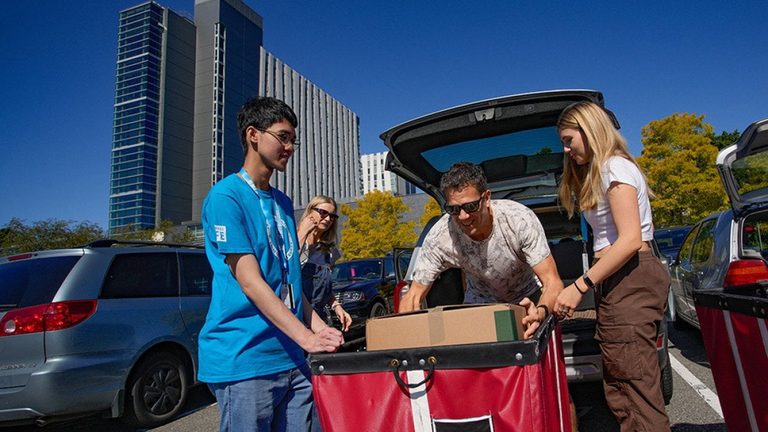
As millions of students prepare to head to college, a smooth dorm move-in can make all the difference. About 1.9 million recent high school graduates will be moving into dorms this fall, according to the National Center for Education Statistics. With the average family spending around $1,325 on back-to-college shopping, a little planning can go a long way.
Before You Arrive
Before buying or packing anything, read your housing assignment and move-in instructions in full. Most colleges assign each student a specific move-in date and time window to stagger traffic, and many tell you exactly what’s already in the room. Knowing what’s provided keeps you from hauling furniture you don’t need.
A realistic dorm essentials list should include only what you’ll use in the first few weeks, not everything you might want all year. You can always ship stuff later or pick up more items during winter break. Consider coordinating with your roommate to divide big shared items like a mini-fridge, microwave, and rug.
Move-In Day
Arrive at the start of your assigned time slot, rather than the middle of the day. The first hour of a move-in slot is almost always calmer than the midday rush. Move-in lands squarely in the summer moving rush, and student moves cluster even tighter, with August alone accounting for about a quarter to a third of all student and dorm moves.
The most useful thing a parent can do on move-in day is handle logistics so the student can focus on the room and the new people in it. This means driving, navigating parking, managing the cart runs, and keeping everyone fed and hydrated. It’s the invisible labor that keeps the day moving smoothly.
Research on the college transition links over-involved “helicopter” parenting to a harder first semester. On move-in day, resist the urge to deep-clean or fully unpack the room yourself, and let your student problem-solve the small stuff. Students settle in faster when the space — and the decisions — already feel like theirs.
Original reporting: KTVZ (Central Oregon) — read the source article.