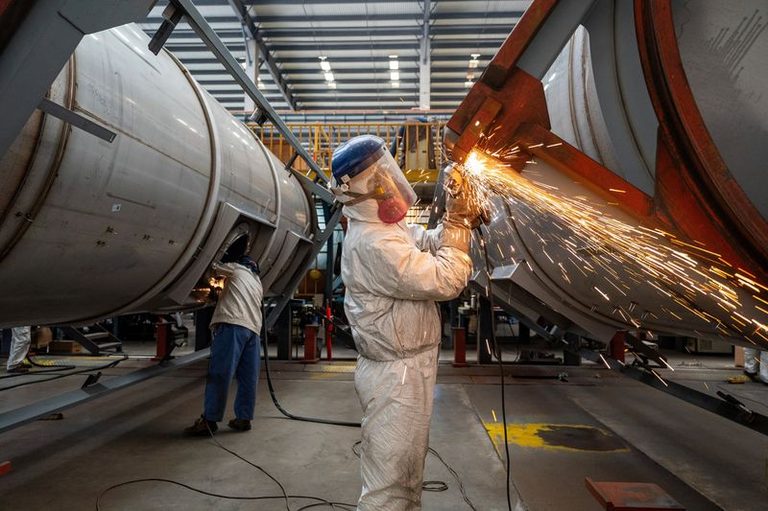
President Xi Jinping used a national conference on advanced manufacturing in Beijing to call for a larger, more resilient high‑tech industrial base. Speaking to officials and industry leaders, Xi said China will “continue making advanced manufacturing bigger and stronger, enhance the autonomy and controllability of industrial chains,” underscoring a push for greater self‑reliance in critical technologies.
Policy focus and strategic goals
The remarks came as Beijing seeks to shift credit and resources away from the property sector toward high‑technology production. Xi highlighted the need to accelerate the building of a modern industrial system with advanced manufacturing at its core, positioning the sector as the backbone of future economic growth.
Premier Li Qiang echoed the president’s priorities, urging a focus on next‑generation intelligent manufacturing, faster digital and AI‑driven upgrades, and a stronger push for indigenous high‑end technologies. Both leaders framed these steps as essential to counter external pressures and to protect China’s strategic supply chains.
International context
The call arrives amid growing concern in Europe and elsewhere about a surge in Chinese exports of electric vehicles and other green‑tech products. Analysts have labeled the trend a possible “China Shock 2.0,” suggesting that the expanding high‑tech trade could intensify competitive pressure on foreign manufacturers.
While China has made notable strides in innovation and competitiveness, Xi acknowledged that the high‑tech boom has not yet translated into stronger household incomes or higher consumer spending. The administration’s emphasis on self‑reliance aims to bridge that gap by ensuring that critical components and technologies remain under domestic control.
Implications for global markets
Observers note that a more robust Chinese advanced manufacturing sector could reshape global supply chains, especially in areas such as electric‑vehicle batteries, semiconductors, and renewable‑energy equipment. The policy direction may lead to increased investment in domestic research and development, as well as tighter export controls on key technologies.
U.S. and European policymakers are likely to monitor these developments closely, given the potential impact on trade balances and strategic competition. The emphasis on autonomy and controllability signals that China intends to reduce dependence on foreign inputs, a move that could affect multinational firms operating in the sector.
Domestic outlook
Within China, the government’s shift toward advanced manufacturing is expected to create new jobs in high‑skill areas and stimulate demand for technical education. However, the transition also poses challenges for workers in traditional industries, underscoring the need for retraining programs and social support.
Overall, Xi’s call reflects a broader strategic vision: to secure China’s position as a manufacturing powerhouse while safeguarding national security interests through greater control of critical industrial supply chains.
Original reporting: Appleton, WI News Feed (HLL/CB) — read the source article.