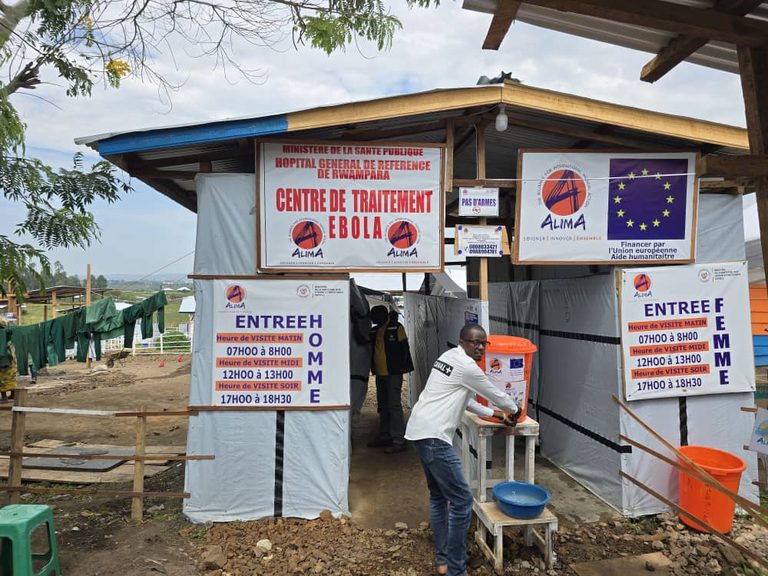
Health officials in the Democratic Republic of the Congo (DRC) are confronting a rapidly spreading Ebola outbreak that began in May and now affects five eastern provinces. This is the 17th confirmed Ebola event in the country and, according to the World Health Organization, the second deadliest outbreak ever recorded worldwide.
Scope of the Threat
The outbreak is caused by the Bundibugyo strain of the virus, first identified in 2007 and known to have roughly a 30 percent fatality rate. As of August 11, more than 4,200 cases have been confirmed, and the disease continues to claim lives faster than any previous outbreak of this strain.
Response Coordination
Dr. Delayo Zomahoun, the CDC country director in the DRC, said CDC staff are working side‑by‑side with ministries of health, international partners, and other U.S. government agencies. Their joint effort focuses on increasing case finding, contact tracing, laboratory testing, infection‑prevention measures, border health checks, and community engagement.
Challenges are significant. Ongoing regional conflict in northeastern DRC, limited public‑health infrastructure, and frequent cross‑border movement from neighboring Uganda complicate response activities. Teams also report shortages of personal protective equipment, delays in transporting specimens, insufficient contact‑tracing capacity, limited diagnostic testing, and a lack of public trust.
CDC Foundation Emergency Response Fund
In June, the CDC Foundation activated its Emergency Response Fund to fill critical gaps. The fund is designed to augment, not duplicate, existing public‑health resources. Judy Monroe, MD, president and CEO of the CDC Foundation, explained that the funding will support essential staff such as epidemiologists and contact tracers, as well as vehicles and equipment needed for rapid response.
“Rapid detection, strong surveillance, laboratory capacity, and close coordination with communities and partners will allow us to save lives,” Dr. Zomahoun said. “No single organization can do this alone.”
Community Education and Safe Burials
Both CDC and its partners emphasize early care‑seeking and safe, dignified burials to curb transmission. Community outreach teams are training locals on how to protect themselves and what steps to take if infection is suspected.
Historical Context and Philanthropy
The current crisis echoes the 2014‑2016 West Africa Ebola epidemic, which infected more than 28,500 people and claimed over 11,300 lives. That earlier response highlighted the pivotal role of philanthropy in mobilizing resources, strengthening community engagement, and supporting frontline workers. Dr. Monroe noted, “When Ebola threatened millions in 2014, philanthropy helped turn the tide. Together we can do it again.”
Looking Ahead
Officials stress that diseases do not respect borders. Recent cases in Uganda and France illustrate how quickly an outbreak can become a global concern, underscoring the need for coordinated cross‑border efforts.
Flexible philanthropic support, combined with government funding, remains essential to close resource gaps, adapt to evolving conditions, and ultimately contain the outbreak.
Original reporting: SaportaReport — read the source article.