Canada and the United States are at an impasse in trade talks after Prime Minister Mark Carney walked away from a proposed agreement that would have reduced French language protections. Carney said Canada “could not accept” any deal that threatened the rights of French‑speaking Canadians, a stance that has reignited a long‑standing dispute over language requirements.
Language laws become a trade barrier
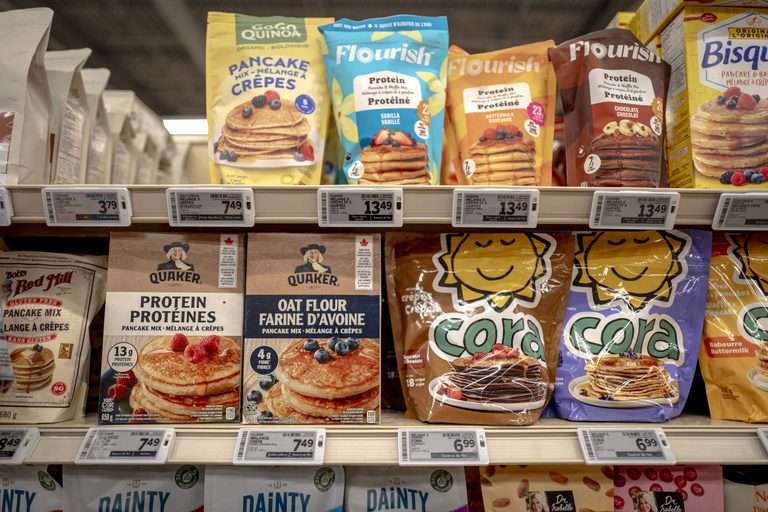
Canada’s bilingual status is enshrined in law, requiring product labels to appear in both English and French and obligating U.S. streaming platforms to promote Canadian content, including Indigenous and French‑Canadian programming. The United States has long viewed these requirements as non‑tariff barriers to trade.
During a news conference in Lévis, Quebec, Carney told reporters that the United States’ request to dilute French language rules was “an enormous gap between our perspective and the U.S. perspective.” He added in French, “Here in Quebec, here in Canada, these are rights,” to a supportive audience of reporters.
U.S. response and tariff escalation
U.S. Trade Representative Jamieson Greer dismissed Ottawa’s concerns as a “funny, fake story,” labeling the language requirements a “discriminatory tax on American companies.” In retaliation for the stalled talks, the United States announced 50% tariffs on roughly $20 billion worth of Canadian goods, set to take effect on September 8. Carney pledged to match those tariffs “dollar‑for‑dollar,” signaling a tit‑for‑tat approach.
Political and cultural stakes
The dispute touches deep cultural and constitutional issues in Canada, especially in Quebec, where French is the sole official language. Quebec’s Bill 96, passed in recent years, tightens French language requirements on packaging, signage, and product labeling. The law was listed in the 2025 U.S. Trade Representative’s global trade barriers report.
Quebec Premier Christine Fréchette praised Carney’s decision, emphasizing that language and culture are central to the province’s identity. She warned that any concession could fuel separatist sentiment, as the province heads toward a provincial election where the Parti Québécois is gaining traction.
Impact on U.S. businesses
U.S. companies seeking to sell in Canada now face higher compliance costs, needing to redesign packaging and marketing materials to meet bilingual requirements. The Online Streaming Act, which mandates platforms like Netflix and Spotify to invest in Canadian content, and Quebec’s Bill 109, which prioritizes French‑language streaming, are also cited as trade barriers by Washington.
Stewart Prest, a political science lecturer at the University of British Columbia, argued that asking Canada to abandon its language laws is unreasonable, comparing it to demanding France relax its own French‑only packaging rules.
Broader implications
While President Donald Trump has not directly addressed the language issue, he has used his Truth Social platform to criticize Canada as “entitled” and among the “worst Nations in the World to deal with.” The rhetoric underscores the broader tension between the two allies over trade, cultural sovereignty, and regulatory standards.
Both nations now face a potential escalation of trade measures unless a compromise can be reached that respects Canada’s constitutional language rights while addressing U.S. concerns about market access.
Original reporting: KOAT Albuquerque — read the source article.