
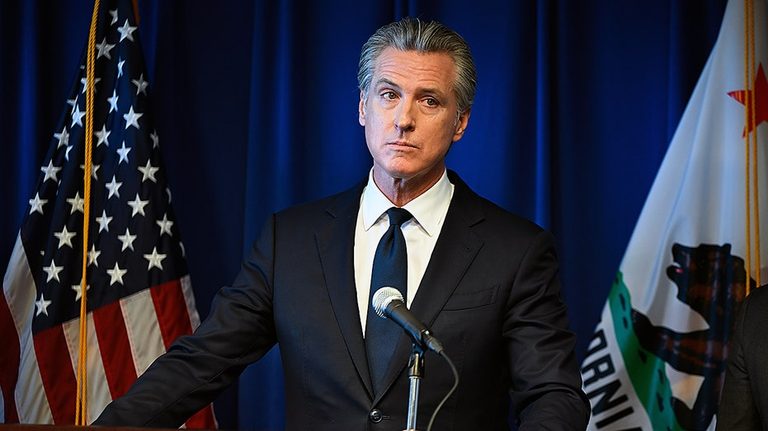
California Governor Gavin Newsom said the state will again take legal action against the Trump administration following the Supreme Court’s 6‑3 decision that lifted an injunction on President Donald Trump’s executive order aimed at tightening mail‑in voting rules. The ruling, issued on Monday, allows the administration to enforce the order while further challenges continue.
Supreme Court decision and its implications
The Court clarified that its opinion addressed only the standing of the earlier injunction, not the ultimate legality of the order. By stating that the directive to the Department of Homeland Security to create state citizenship lists imposes obligations on federal agencies rather than on the states themselves, the justices left the door open for additional lawsuits.
Newsom’s response
In a statement released by his office, Newsom called the decision “a serious legal error” and warned that it could “disenfranchise voters across the country.” He vowed that California would sue “again” to block what he described as “Orwellian” rules that threaten election integrity.
California’s own election‑protection measures
The governor highlighted two bills currently moving through the California Legislature that aim to safeguard the state’s elections. Assembly Bill 282 would create new felonies for the seizure of ballots, election records, or certified voting technology before results are certified. Senate Bill 259 would impose criminal penalties, including a felony with up to four years in prison, for anyone who interferes with the delivery or return of mail‑in ballots.
Newsom’s office called the package an “Election Protection” package, noting that it builds on election‑related legislation the governor signed earlier this summer.
Federal agencies prepare to implement the order
The U.S. Postal Service and the Department of Justice indicated they will move forward with the revised mail‑ballot restrictions outlined in the executive order. The order directs federal agencies to compile citizenship‑based lists of eligible voters and instructs the Postal Service to deliver mail‑in ballots only to individuals appearing on those approved lists.
Legal background
The Supreme Court’s opinion explained that the provision directing the Secretary of Homeland Security to create and distribute state citizenship lists is an internal directive from the President to a subordinate agency. Because the directive does not impose obligations on the states themselves, the Court found that the states “suffer no concrete harm” and therefore lack standing to challenge the provision.
Justices Sonia Sotomayor, Elena Kagan, and Ketanji Brown Jackson dissented from the majority opinion.
What comes next?
California’s lawsuit will likely argue that the executive order violates constitutional protections for voters and undermines the state’s authority to conduct free and fair elections. The case adds another layer to the ongoing national debate over mail‑in voting, voter eligibility verification, and the balance of power between federal directives and state election administration.
Newsom’s office did not immediately respond to a request for further comment.
Original reporting: Fox News (HLL/CB) — read the source article.


