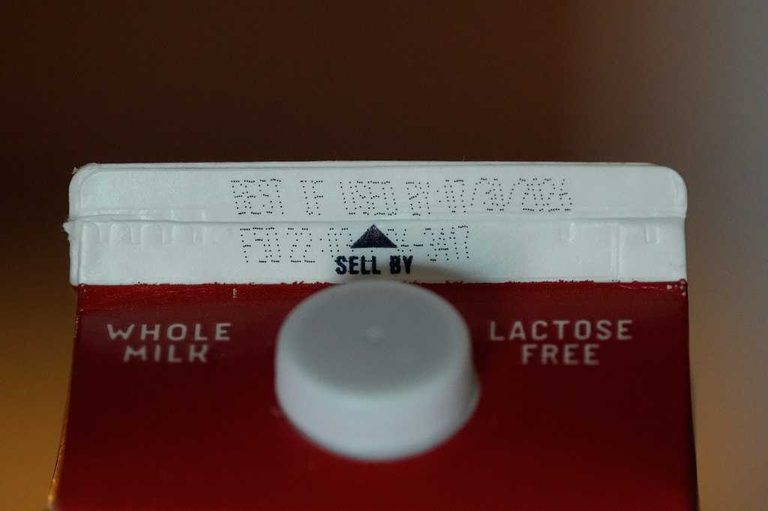
California has introduced a new food labeling law that bans the use of ‘sell by’ labels on food packaging. The law, which came into effect on July 1, aims to reduce confusion among consumers and cut down on food waste. Instead of ‘sell by’ labels, manufacturers will be required to use two standardized labels: ‘Best if Used By’ for peak quality and ‘Use By’ for product safety.
Reducing Food Waste
The new law is expected to reduce food waste in California, which is estimated to be around 6 million tons of unexpired food per year. The ‘sell by’ date labels have been a major contributor to this waste, as consumers often mistakenly believe that the food is no longer safe to eat after the date has passed.
According to Nick Lapis, director of advocacy at Californians Against Waste, food labels are the leading cause of household food waste. ‘We don’t need to build some kind of huge infrastructure and invest tons of money to solve this. We just need companies to use the same words across brands,’ he said.
The new law is also expected to have a positive impact on the environment, as food waste is a significant contributor to greenhouse gas emissions. California’s move is seen as a step towards reducing the state’s climate-warming emissions and promoting sustainability.
National Implications
California’s new food labeling law may have implications for the rest of the country. A bipartisan bill is currently pending in Congress that would establish uniform food labels nationwide. The U.S. Department of Agriculture has also recommended that food sellers switch to ‘Best if Used By’ labeling.
New York state has also approved a similar law, which is awaiting the governor’s signature. Other states, including Illinois, Maryland, Massachusetts, New Jersey, and South Carolina, have proposed legislation addressing food labeling, but it has not yet passed.
Original reporting: 40/29 / KHBS (NW Arkansas) — read the source article.