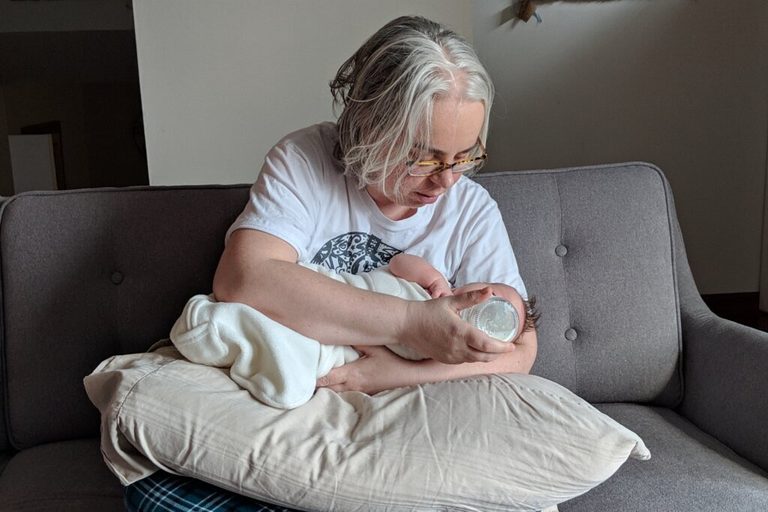
Bridget María Chesterton, a 52‑year‑old history professor living outside Buffalo, New York, opened up about her experience with postpartum psychosis, a rare but serious mental‑health emergency that can follow childbirth. Two weeks after delivering her daughter by C‑section in January 2019, Chesterton was found on her bathroom floor, confused and unable to recognize basic details of her life.
Recognizing the illness
Family members reported that Chesterton repeated nonsensical phrases such as “it’s meditation day,” despite never having meditated. Her mother, Maria Chesterton, said her daughter “didn’t even remember having a baby” and only knew the family “vaguely.” Doctors identified the condition as postpartum psychosis, which researchers estimate affects 1 to 2 per 1,000 new mothers—far less common than postpartum depression.
Medical care and family involvement
Chesterton was admitted to BryLin Hospital, a Buffalo crisis‑mental‑health facility, where she spent roughly two weeks before being released. Within days, she experienced a relapse, prompting an involuntary hospitalization for another two‑week period. Throughout her treatment, antipsychotic medication helped stabilize her symptoms, but Chesterton emphasizes that the unwavering support of her husband James Fitzsimmons, her parents, and a postpartum doula was equally essential.
“She helped me learn how to take care of the baby, remember her — you know, to become a parent again,” Chesterton said of the doula’s assistance. Her mother added that the family’s vigilance and willingness to act quickly were critical in preventing a worse outcome.
Recovery and hope
Over the following months, Chesterton’s condition improved gradually. By the time her daughter turned one, Chesterton was attending the birthday celebration without the glassy‑eyed look that had once plagued her. She remained on antipsychotic medication for about a year, and her doctor, Dr. Emily Williams of Buffalo OB/GYN, noted that early detection and family involvement are key factors in successful recovery.
Chesterton now seeks to raise awareness about postpartum psychosis, a condition she says is “widely misunderstood.” She plans to publish a poem about her experience in an upcoming journal and hopes her story will dispel misconceptions and encourage other families to seek help promptly.
Context of the national conversation
The story has gained renewed attention due to the high‑profile Lindsay Clancy case in Massachusetts, where a mother on trial for the deaths of her three children was also diagnosed with postpartum psychosis. While most women with the condition do not harm their children, the Clancy case has sparked debate about the role of mental‑health disorders in criminal proceedings.
Chesterton’s account underscores that, with proper medical treatment and a strong support network, recovery is possible. She urges other families to remain alert for signs such as disorganized thinking, delusions, hallucinations, or severe mood swings, and to act without delay.
Original reporting: Alexandria, VA News – WTOP News — read the source article.