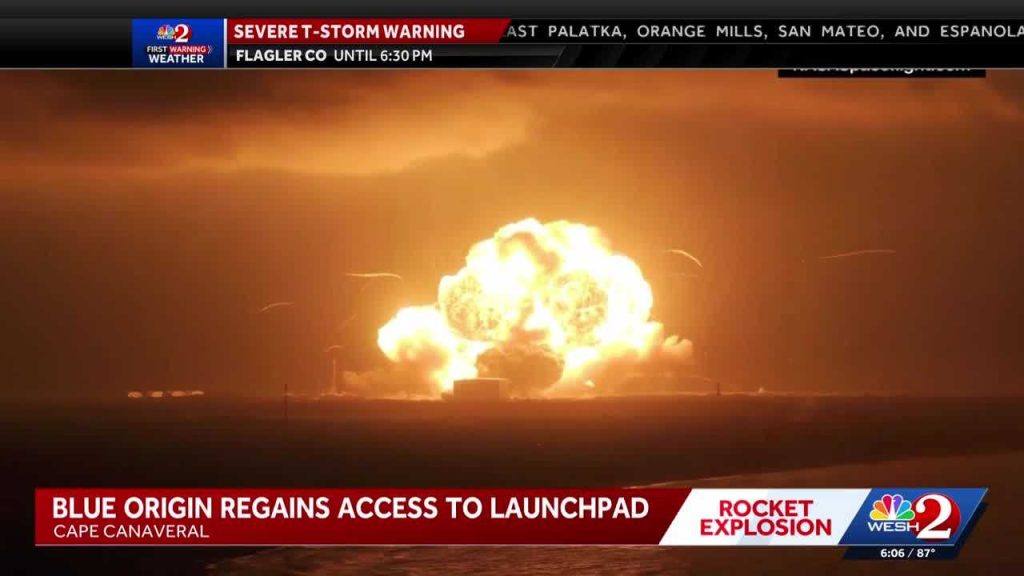
Blue Origin has regained access to Launch Complex 36 at Cape Canaveral Space Force Station following the explosion of a New Glenn rocket. The incident, described as a “hotfire anomaly,” is currently under investigation. Blue Origin CEO Dave Limp announced the company’s plans to clear the pad and begin rebuilding.
Impact on Space Programs
The explosion, which occurred at 9 p.m. on Thursday, was significant enough to prompt over 40 calls to 911, with one caller likening the sight to an “atom bomb.” Despite the dramatic event, no injuries were reported. The U.S. Space Force confirmed the explosion, and NASA Administrator Jared Isaacman stated that the agency is assessing the implications for the Artemis program, which aims to establish a moon base.
Blue Origin’s New Glenn rockets are integral to the Artemis program, serving as launch vehicles for lunar landers. Eric Berger, senior space editor at Ars Technica, suggested that while the situation is a setback, it is not insurmountable. He estimated a delay of 12 to 18 months before the launchpad is operational again. NASA’s target date for the Artemis III launch remains late 2027.
Community and Safety Concerns
In the aftermath of the explosion, Blue Origin has warned beachgoers in Brevard County about potential debris washing ashore. The company advised the public to avoid touching any suspicious materials found along the shoreline or in the water, and to report any findings to Blue Origin’s recovery team.
Meanwhile, other space companies at Cape Canaveral, such as SpaceX and United Launch Alliance, continued their operations without interruption, successfully launching their Falcon 9 and Atlas V rockets the day after the explosion.
Blue Origin founder Jeff Bezos stated that it is too early to determine the root cause of the explosion, but efforts are underway to investigate the incident thoroughly.
Original reporting: WESH Orlando — read the source article.