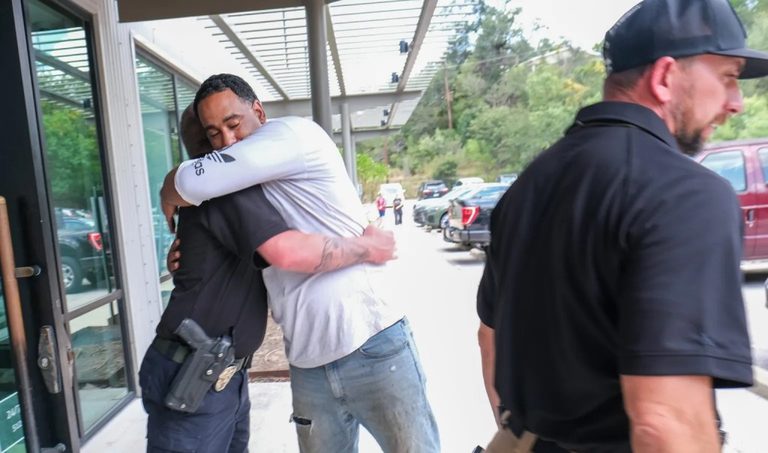
On an August afternoon in southeast Austin, Marcus Martin walked out of the Travis County Correctional Complex with a smile, greeted not by social workers but by Austin Police Department officers assigned to a new cross‑agency effort called No Wrong Door. The program is designed to help people experiencing homelessness and complex mental‑health disorders who repeatedly interact with law enforcement, emergency rooms and the courts.
How the program works
Four APD officers—Edward Soltys, Cody Martin, Steven Creamer and a fourth teammate—each manage about 25 “high‑utilizer” clients. These are individuals whose repeated arrests, psychiatric crises and hospital visits cost the county an estimated $137 million a year. Officers meet clients wherever they are—on the streets, in shelters, in rehab facilities or in jail—and coordinate housing, treatment and other services.
While Martin was incarcerated, officers met with him to assess his needs. Upon release, he was linked to an Integral Care clinic for ongoing mental‑health care and received hands‑on assistance from officers, including rides to appointments. Martin says the support feels like a “beautiful blessing” after years of drug use, homelessness and repeated arrests.
Community response
The initiative has drawn both praise and caution. Advocates such as Cate Graziani of VOCAL‑TX worry that police involvement could infringe on personal agency and civil liberties. “When a cop is asking you to do something, it’s not the same as when a social worker is talking to you,” she said.
City officials argue the program fills a coordination gap. Austin Legislative Director Carrie Rogers notes that 17 partner agencies have signed agreements to share information and resources, allowing officers to alert dedicated APD staff when a known client is encountered. This “one‑stop‑shop” approach aims to prevent the repeated cycling of individuals through jail, hospitals and the streets.
Broader context
Austin’s robust behavioral‑health system has attracted people from surrounding counties, creating additional pressure on local resources. David Gray, director of Austin Homeless Strategies and Operations, cites cases like an elderly woman who arrived without medication or support, highlighting the need for coordinated care beyond simple housing placement.
No Wrong Door is funded through existing city and county resources, and officials see it as a test of whether Austin can move beyond reactive crisis response to proactive, collaborative assistance for its most vulnerable residents.
Original reporting: Texas Tribune (HLL/CB) — read the source article.