AT&T Stadium in Dallas has been radically reworked for the 2026 World Cup, swapping the Cowboys’ artificial turf for a full natural grass pitch and new infrastructure. Stadium general manager Tod Martin and FIFA’s Ewen Hodge walked reporters through the buildout and the testing plans that aim to keep the playing surface strong through nine tournament matches at what FIFA will call Dallas Stadium. The project blends massive logistics, specialized turf, and new technology in a tight timeline ahead of kickoff.
The transformation isn’t cosmetic — it involved a huge moving operation to lay a tournament-ready field on top of a football venue built for turf. “You’re looking at roughly 45-thousand man hours, 15-thousand tons of materials hauled in,” Tod Martin said, and the scale shows in cranes, trucks, and crews working inside the bowl. Fans will notice a different look and feel when the grass settles in for the matches.
This is not merely grass rolled over existing surfaces; the playing surface is a Kentucky bluegrass and ryegrass mix selected for tournament play. The sod was grown in Colorado and then moved nearly 800 miles to North Texas to be installed inside the stadium, a deliberate choice meant to deliver the right texture and responsiveness on match day. “Started harvest on the farm this past Friday up in Colorado,” Martin said, underscoring the timeline pressure on moving a living field into place.
Beneath the blades, the field includes a full ventilation and irrigation network built to keep the turf healthy under dome conditions and heavy use. That hidden engineering matters because stadiums built for American football don’t typically need the same day-to-day microclimate control a tournament-level pitch demands. The system is designed to regulate moisture, airflow, and root-zone health so the grass behaves predictably as the matches pile up.
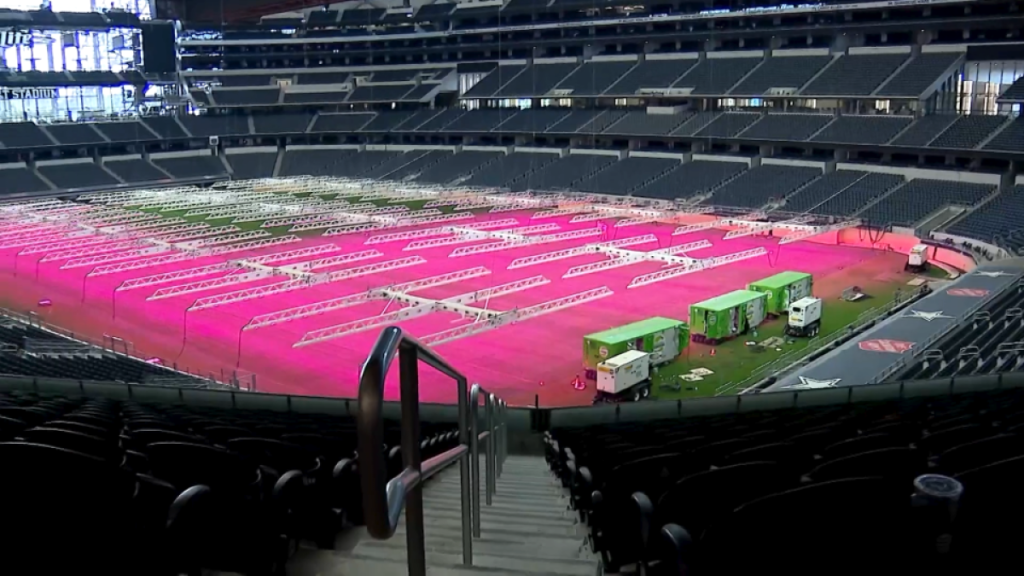
One of the most striking visual changes is the lighting rig above the pitch: 18 large pink grow lights suspended from the ceiling to stimulate the grass in the absence of natural sun. Officials note this lighting setup is being used for the first time during a World Cup, and it will be raised into position ahead of the opening games to give turf the consistent light cycles it needs to stay resilient. The scale of the lights and their vivid hue have already become an unmistakable part of the stadium’s new identity.
FIFA will judge the field on more than how it looks; playability matters just as much, which is where testing comes into play. “Making sure the actual feeling under the feet and the bounce of the ball is behaving like they used to are important aspects that we can both watch and test for,” Ewen Hodge said, highlighting that metrics and on-field trials will determine whether the surface meets global standards. Teams, officials, and turf scientists will all be watching how the grass performs in training and friendly matches before the tournament proper.
Stadium staff and FIFA point to prior tests as the basis for confidence that the field will survive a grueling match schedule and stadium demands. “Very confident with the tests we’ve done thus far on the Copa games, and all the testing with FIFA and the University of Tennessee and Michigan State, we’re gonna have a great product that’s gonna last,” Martin said, tying together the academic and practical trials that informed the installation. Those collaborative tests helped fine-tune irrigation timing, root depth, and the interaction between foot and ball that players will notice.
The World Cup kicks off on Thursday, June 11, 2026, and Dallas Stadium will host its first match on Sunday, June 14, when Japan meets the Netherlands. With the pitch installed, the lights staged, and the monitoring systems in place, organizers say they are focused on delivering a field that can handle international play and give players the surface they expect at the sport’s top level.