Arlington officials are moving to remove a 46‑year‑old barrier that prevents the Massachusetts Bay Transportation Authority (MBTA) from planning or building a Red Line extension into the town. The effort, led by state representatives Sean Garballey and David Rogers and Senator Cindy Friedman, seeks to repeal a 1980 law that requires explicit legislative authorization for any further transit expansion.
Local demand for better transit
“We’ll choke in traffic if we don’t get better transit in town,” said Paul Schlichtman, a Town Meeting member and member of the community group Extend the Red Line. Schlichtman noted that Arlington has been building more housing to accommodate a growing population, and the existing road network cannot sustain the added demand.
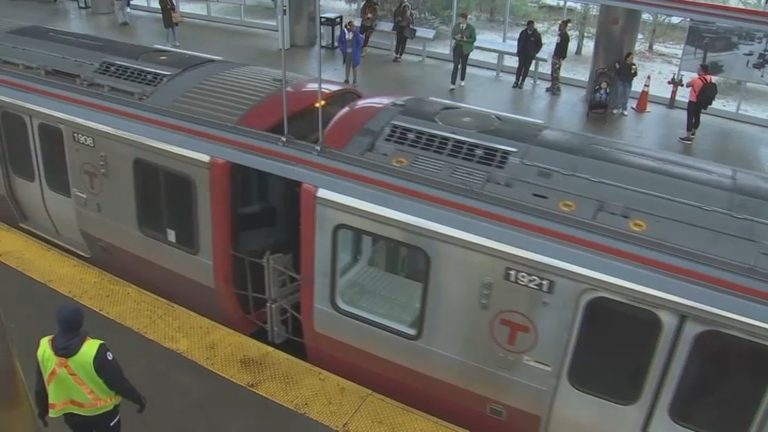
Arlington, a suburb about 10 miles northwest of downtown Boston with roughly 45,000 residents, currently relies on several MBTA bus routes but lacks any subway or commuter‑rail service. The Red Line, which runs from Braintree and Dorchester through Boston to Alewife Station in Cambridge, sees daily ridership between 107,000 and 146,000 riders in 2025.
Legislative action
Garballey, Rogers, and Friedman filed House Bill 6313 this month to repeal the restrictive clause of the 1980 law. The bill originated as a home‑rule petition approved by Arlington Town Meeting in May, when members voted 145‑54, with 11 abstentions, to empower the Select Board to pursue the repeal.
“It’s a goal to provide more services to our constituents,” Garballey said. “Arlington is a massive population right outside Boston and there is no train service that goes through the town.” He added that the repeal would open the door for studies on extending the Red Line or creating a Bus Rapid Transit (BRT) corridor along Route 2.
Town Meeting and Select Board positions
While the Town Meeting passed the home‑rule petition, the Select Board voted 4‑0 to recommend no action on the repeal, citing concerns that the law’s reference to the “northwest rapid transit extension” may have expired when the MBTA completed the Northwest Extension in 1985, and that other pending petitions required more immediate attention.
Schlichtman countered the Board’s recommendation with a substitute motion, which the Town Meeting approved, keeping the repeal effort alive.
State and MBTA response
MBTA communications manager Maya Bingaman said the agency looks forward to working with the legislators to explore possible transit options for the region. However, the MBTA’s 2027‑2031 Capital Investment Plan does not allocate funding for a Red Line extension to Arlington, and the 2026‑2030 plan similarly references public support without earmarking money.
Senator Friedman emphasized that she supports removing legal obstacles to transit expansion. “I sponsor the home‑rule petitions of each community I represent as long as there are no moral, ethical, or legal issues with the proposed legislation,” she said. “While we may not see an extension project in the near future, I don’t believe our laws should prohibit it.”
Funding for feasibility studies
In the fiscal 2027 budget, Garballey and Rep. Michelle Ciccolo secured a $50,000 earmark for the MBTA to study the financial feasibility of extending the Red Line or creating a BRT line from Alewife along Route 2 to the Concord Rotary. The legislators also co‑sponsored House Bill 3666, which would create a commission to assess the best transit options for Arlington, Lexington, Concord, and the Route 2 corridor. The bill cleared the House Ways and Means Committee in November with a unanimous 12‑0 vote and now awaits further action.
Next steps
The repeal bill has not yet been assigned to a committee, and the Massachusetts Legislature concluded its formal session in July. Garballey remains optimistic that the measure will pass before the end of the year, noting that a comprehensive feasibility study is essential before any construction can begin.
“Arlington demands adequate public transportation, and I think it was a real missed opportunity decades ago when the Red Line was not extended through Arlington,” Garballey said. “A thorough study will help us determine the best path forward for our residents and neighboring communities.”
Original reporting: NBC10 Boston — read the source article.