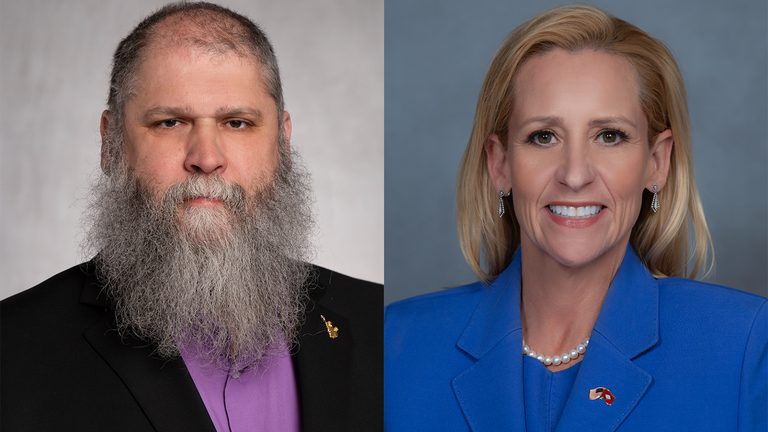
Arkansas voters will decide this November who will serve as the state’s lieutenant governor, a role that stands first in line to succeed the governor and presides over the state senate. The ballot features two distinct candidates: incumbent Republican Leslie Rutledge and Libertarian challenger Michael Kalagias.
Incumbent Leslie Rutledge Highlights Service to Families
Rutledge, who served eight years as Arkansas’ attorney general before becoming lieutenant governor in 2023, told 40/29’s Yuna Lee that she spends much of her time traveling across the state listening to Arkansans. “You know, I’m tired, just like Arkansans are. I’m tired of being 46 and 47 in certain categories,” she said, underscoring her commitment to practical solutions for everyday families.
She emphasized her close collaboration with Governor Sarah Sanders and the legislature to pass measures that help Arkansans live safely, raise their children in great neighborhoods, and secure good jobs. Rutledge warned against “rogue, dangerous ideas” from both the far left and the far right, positioning her office as a steady, bipartisan force for the community.
Libertarian Candidate Michael Kalagias Calls for Budget Reductions
Kalagias, a Navy veteran and volunteer firefighter, described himself as a perennial Libertarian candidate. He argued that the lieutenant governor’s office is “not that important” and that five states operate without one. “All those responsibilities can be taken by other officials,” he said, proposing to cut the office’s budget, which he noted exceeds $500,000 annually, not including the salary.
Kalagias’ platform centers on reducing government spending and streamlining state functions. He believes that trimming the lieutenant governor’s budget would save taxpayer dollars without compromising essential services.
What Voters Need to Know
Both candidates have spoken on 40/29’s “On the Record” program, offering voters a clear view of their priorities. Rutledge’s record includes a focus on family‑centered policies, economic growth, and public safety, while Kalagias pushes for fiscal restraint and a smaller government footprint.
Arkansas’ lieutenant governor also casts tie‑breaking votes in the state senate, making the role a potential swing factor on close legislative matters. Voters should consider how each candidate’s philosophy might influence future policy decisions.
Election Details
The lieutenant governor race appears on the November ballot alongside other statewide contests. Arkansas voters can find polling locations and registration deadlines on the Secretary of State’s website. Early voting and absentee ballot options are also available for those who prefer to vote before Election Day.
As the campaign progresses, both candidates are expected to continue engaging with communities across the state, highlighting their visions for Arkansas’ future.
Original reporting: 40/29 / KHBS (NW Arkansas) — read the source article.