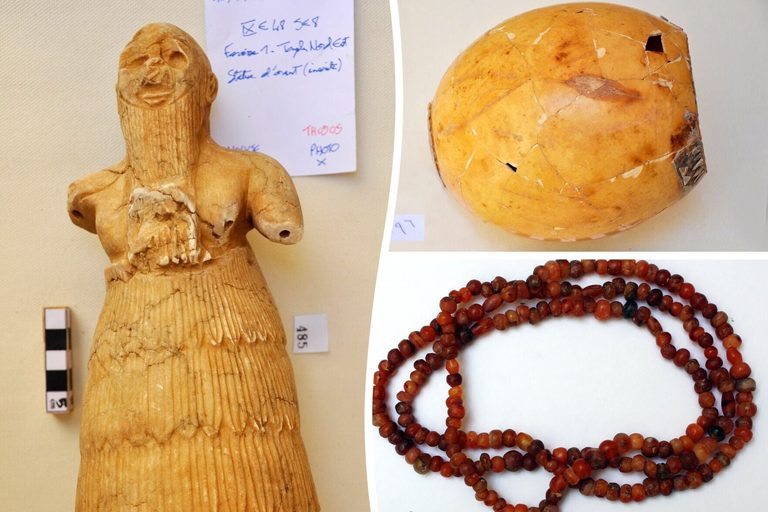
When the Islamic State of Iraq and Syria (ISIS) surged across eastern Syria in 2014, the Deir ez‑Zor Museum faced imminent capture. In a daring operation documented in the journal Museum Management and Curatorship, archaeologists rescued about 30,000 artifacts that might otherwise have been destroyed or looted.
Why the rescue mattered
Maamoun Abdulkarim, professor of archaeology and history at the University of Sharjah and former director‑general of Syria’s Directorate‑General of Antiquities and Museums (DGAM), says the effort went beyond saving objects. The artifacts embody the collective memory of the Euphrates region and the broader Mesopotamian cultural sphere, where some of humanity’s earliest civilizations flourished.
Challenges on the ground
Deir ez‑Zor sits on a strategic oil and gas corridor and was heavily contested during Syria’s fifteen‑year civil war. The museum’s only access route ran through a narrow corridor adjacent to a military airport, making any movement “exceptionally dangerous.” Abdulkarim explains that successful rescue required rapid decision‑making, institutional resilience, and trusted relationships among colleagues.
“There is rarely a perfect moment to act during an armed conflict; often, delaying a decision in search of greater certainty poses a greater danger than acting under uncertainty,” he said.
Scale of the operation
During Abdulkarim’s tenure at DGAM (2012‑2017), roughly 300,000 museum items were relocated to secure sites. The Deir ez‑Zor haul alone accounted for about 30,000 objects, representing the overwhelming majority of the museum’s collection. These pieces originated from renowned sites such as Halaf, Dura‑Europos and Mari.
Lessons for heritage protection
Abdulkarim stresses that risk management must be embedded in everyday heritage work, not introduced only after a crisis erupts. He urges the development of documentation, professional capacity, and trust networks during periods of stability so that emergency actions can be executed swiftly when needed.
“In a cultural emergency, waiting for perfect conditions can become more dangerous than acting under uncertainty,” he warned. “The most valuable resource during a crisis is not always money or technology; sometimes it is the trust between colleagues who can make the right decision when time is short.”
Broader implications
The study frames the Deir ez‑Zor rescue as a case study for protecting cultural heritage in wartime. It highlights how swift, coordinated action can safeguard humanity’s shared history even amid the chaos of modern conflict.
Original reporting: KTBS 3 (Shreveport) — read the source article.