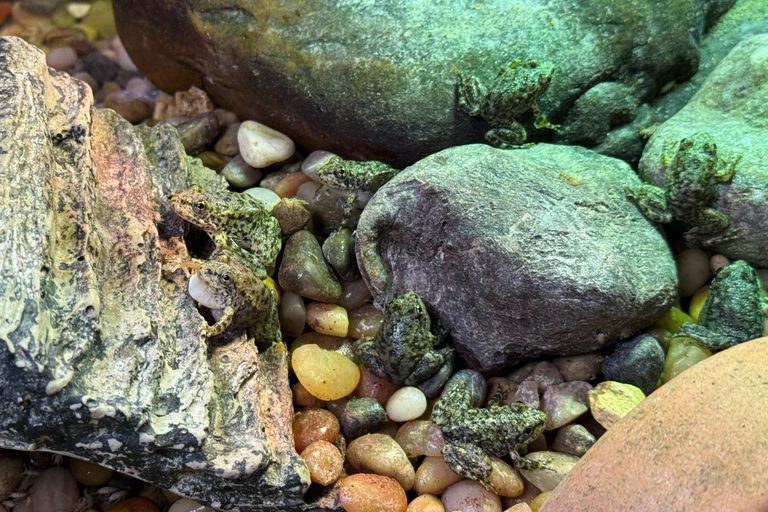
Los Angeles – Conservationists at the Aquarium of the Pacific are celebrating a steady flow of releases of the critically endangered mountain yellow‑legged frog. Since 2020, the aquarium’s frog nursery has raised and released more than 1,000 frogs, a vital step toward rebuilding a population that fell to under 200 wild individuals by 2021.
From tadpole to frog: a hands‑on effort
Each year the aquarium receives batches of tadpoles from the Los Angeles and San Diego zoos. Recent shipments included nearly 500 tadpoles, some descended from frogs native to the San Jacinto Mountains and others from the San Bernardino Mountains. The animals are divided into groups based on subtle genetic differences, then placed in carefully monitored tanks.
“These guys look amazing,” said Erin Lundy, the aquarium’s conservation initiatives manager, as she inspected the healthy newcomers. The tadpoles are fed four to five times daily with a blend of spirulina, fish food and calcium, allowing them to graze much as they would on algae‑covered rocks in their natural streams.
High survival rates and careful preparation
According to Lundy, about 60‑65 % of the aquarium’s tadpoles survive to the point where they have fully formed limbs and no longer retain a tail – a survival rate considered high for this species. Staff periodically adjust water flow to strengthen the young frogs’ limbs and acclimate them to varying currents, mirroring the challenges they will face in the wild.
When the frogs are ready, they are released into restored habitats. In August alone, more than 650 frogs were set free, with nearly 400 raised entirely at the aquarium. One memorable release saw a juvenile leap from its container, land on a rock and instantly snap up a housefly – a behavior it had never encountered before.
Why the species matters
Mountain yellow‑legged frogs play a crucial role in California’s mountain ecosystems. As tadpoles they consume large amounts of algae and decaying organic matter, helping keep waterways clear. As adults they provide a food source for a variety of predators, contributing to a balanced food web.
The species has faced multiple threats over the past century. Introduced non‑native trout in the late 1800s preyed on tadpoles, while the chytrid fungus has caused declines in amphibian populations worldwide. The most recent catastrophe came in fall 2020 when the Bobcat Fire destroyed roughly 95 % of the frog’s habitat, followed by mudslides and runoff that further damaged the remaining streams.
Looking ahead
“Although they’re slow growers, given the right conditions frogs are pretty successful, so my hope is that we can get them back,” Lundy said. The aquarium’s ongoing partnership with state and federal wildlife agencies, along with the dedication of its staff, aims to continue expanding the frog’s numbers and restoring the mountain streams they call home.
Community members are encouraged to support local conservation efforts and stay informed about upcoming release events, which provide a tangible way to witness the recovery of a species once on the brink of disappearance.
Original reporting: Alexandria, VA News – WTOP News — read the source article.