Alaska prosecutors announced Friday that they are dropping felony voter‑misconduct charges against 11 residents of the small Whittier community, after a three‑judge Court of Appeals panel ruled the state’s law demands proof of a “consciousness of wrongdoing” before a felony can be sustained.
Court of Appeals decision
The appellate panel found serious flaws in the original investigation, including a confusing, multi‑part question posed by a state trooper to Tupe Smith, the woman whose case sparked the litigation. The panel also criticized the grand‑jury process that led to her indictment, ultimately overturning the lower‑court decision that had kept the charges alive.
Prosecutorial response
Acting Alaska Attorney General Cori Mills said the department reviewed the appellate ruling and, applying it to the facts, concluded it could not prove the cases against Smith or the other defendants beyond a reasonable doubt. “We respect the role of the courts in interpreting Alaska law and will faithfully execute our duty to apply the law and carefully evaluate our prosecutorial decisions,” Mills said.
Background on the defendants
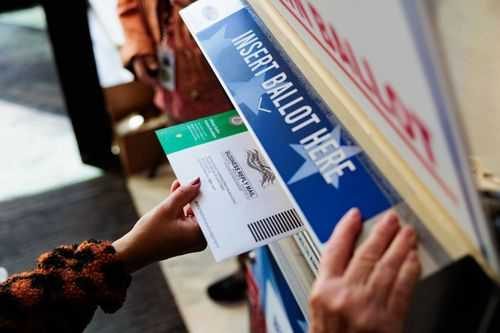
The 11 individuals, including Smith’s husband Michael Pese, were charged with falsely claiming U.S. citizenship on voter‑registration forms or when attempting to vote. American Samoa is the only U.S. territory where birth on the island does not automatically confer citizenship; residents are U.S. nationals and must pursue naturalization to become citizens.
Smith, who was elected to a regional school board in 2023, said she marked herself as a U.S. national on paperwork. When the registration form offered no such option, city officials advised her to check the “U.S. citizen” box. Prosecutors argued she knowingly misrepresented her status, pointing to warnings on the 2020 and 2022 forms that non‑citizens are ineligible to vote.
Legal implications
The appellate ruling clarifies that Alaska’s voter‑misconduct statute cannot be applied solely on the basis of a false statement; the state must demonstrate that the defendant acted with a conscious intent to violate the law. Whitney Brown, Smith’s attorney, hailed the decision as a safeguard against felony liability for honest mistakes.
Community reaction
Smith’s legal team and local advocates welcomed the dismissal, saying it allows the Whittier community to move past a painful ordeal. Neil Weare of the nonprofit Right to Democracy called the prosecution “baseless” and questioned why it was pursued at all.
The case underscores the complexities faced by American Samoan nationals in navigating citizenship status and voting rights, and it may influence how Alaska’s voter‑misconduct law is enforced in the future.
Original reporting: WESH Orlando — read the source article.